Thursday, August 21, 2008 

Understanding radicalisation.

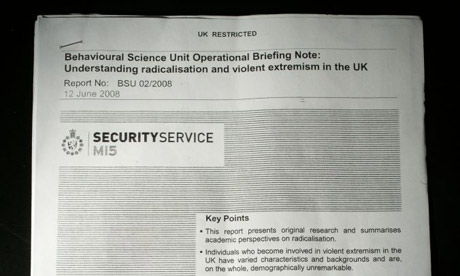
The MI5 report "leaked" to the Guardian, titled Understanding radicalisation and violent extremism in the UK, does the reassuring job of telling you little which you didn't already know while confirming just that which you did.

Firstly, it makes clear the idea that that there a number of extremist preachers doing most of the radicalising, or even brainwashing is either completely out-of-date, if it ever was the case. Rather, it's what a number of individuals have been arguing for quite some time: that those who become radicalised are often first exposed to extremist material online, become engaged in those communities, but also often have to have some sort of real world link to either a charismatic or popular local figure also versed in radical Islam. Once inside such small autonomous groupings, the emotional reward of belonging comes into play, giving meaning to a life which might have been up till then wholly lacking in it, with the other members almost becoming like an extended family, similar to criminal gangs.

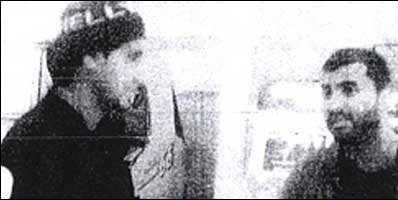
Perhaps the ultimate example of this in action could be the 7/7 bombers. Whilst the ringleader of the 9/11 attacks, Mohamed Atta, has since been portrayed as an angry self-obsessed sexually frustrated, even constipated psychopath, almost the opposite is the case when you consider Mohammad Sidique Khan, the alleged 7/7 ringleader. On the face of it, MSK had everything to live for: his daughter had only just past her 1st birthday, he had previously worked as a teaching assistant and youth worker, and very few people generally had a bad word to say about him. He appears to have been conscientious, charismatic and well-liked; everything which ultimately led to those around him deciding to end their lives whilst murdering others around them.

The idea that MSK was after the promised 72 virgins for martyrs doesn't seem convincing when he was so clearly devoted both to his child and his wife; he was not, perhaps unlike the other bombers, stuck in dead-end, unrewarding jobs and so frustrated with his lot in life; and whilst he didn't talk about his religious beliefs to many people, he was certainly devout without being overbearing. He played the role of the gatherer, the charismatic leader which those around him looked up to and enjoyed the company of. The abiding image we have of him, outside of the few other video clips, including the one where he says goodbye, movingly, to his daughter, is the "martyrdom video" he recorded which was subsequently released by As-Sahab, al-Qaida's media arm. His self-serving justifications, now all too familiar, belie the man that he clearly was in private.

Also noted in the report that by no means are those who become radicalised well versed in Islam in its totality. Indeed, few are probably anywhere near as versed as this Islamist blogger suggests for training recruits, and that is mostly a collection of the familiar radical preachers. Probably closer would be the suggestions made by this forum inhabitant, both courtesy of the excellent Jihadica blog. While opinion is divided over whether Islam is inherently violent, and neither side should be dismissed out of hand, it's probably telling that those who have emerged from radical groups have done so only after they have properly assessed a far wider spectrum of theological thought, Ed Husain, Maajid Nawaz et al. Rachel North, who has more reason than most for wanting to get to the very bottom of what motivates radicalisation and subsequently terrorism, has reported that Atila Ahmet, one of those recently jailed as part of the "paintball jihad" had to be segregated from other extremists, due to his studies into Islam and renunication of his past beliefs.

Additionally left on the myth heap is the idea that all of those radicalised or involved in extremism are asylum seekers, when half of those evaluated by MI5 were born here, with the other half mostly immigrating here mainly for economic reasons, that poverty is not an issue, as shown by the amount of those stuck in "McJobs" despite in many cases having decent qualifications, and that only those who are "pure" in their past behaviour are eligible, is if that wasn't laughable enough considering the criminal schemes which those who have carried out attacks have indulged in. Also doubtful is the claim by one group which suggested that those raided often didn't have any pornography on their computers when they were searched; the report suggests that despite it being generally being considered haram to consume alcohol in Islam, some were drinkers, drug-takers and even used prostitutes, although again the 9/11 example of some of the attackers visiting a strip club the night before also should have put paid to that one. Some of this could perhaps be a result of the jihadis adopting the ideology of extremist groups such as Takfir wal-Hirja, whose members "blended in" by shaving their beards, drinking, etc, although again, it might just be that like everyone else, jihadis can't live up to their own moral standards and so can be seen as hypocrites.

There are a couple of things that do appear to be missing from the report however. There doesn't seem to be any mention, for example, of the role that foreign policy plays in the radicalisation progress. Whilst we should never fall into the trap of dismissing terrorism as being purely down to our own actions in countries considered Muslim states, it would be equally naive to dismiss the idea that it has no role whatsoever. Yet nowhere, at least in the Guardian report of the document, does it allude to our actions in either Afghanistan or Iraq, which seems strange, especially when you consider that the security services themselves warned that action in the latter would lead directly to an increase in attacks. Also, perhaps less suprisingly, there doesn't seem to be any reference to the security services' own role in helping radicalisation along. Only today we learn indisputably that MI5 were involved in the interrogation of Binyam Mohamed, currently languishing in Guantanamo and potentially facing execution, which led to his horrendous torture in both Pakistan and Morocco. Yesterday I mentioned the role of MI5 in the rendition of Bisher al-Rawi and Jamil al-Banna, both of whom had had direct relations with the service. This is without also mentioning the unsubtle actions of the police, for instance in the raid on Forest Gate, which contributes to the victimhood mentality which most certainly is a part of radicalisation. The report also makes clear that this is not just a mentality or illusion; racism, discrimination, inequality, "mainstream UK media coverage that perpetuates negative stereotypes of Muslims", all play a role which is heightened and repeated again and again until the only response is to strike back physically, with the religious ideology as the justification.

If all this suggests that the fight against terrorism and radicalisation is as infinitely complex as the process itself is, then it doesn't necessarily need to be so. What is clear is that the heavy-handed government approach is still at the moment part of the problem rather than the solution. Also unhelpful is the continuing demonisation of Islam as a whole, as shown recently by Peter Oborne (PDF). Instead, as if it wasn't already obvious, the fight has to be led from inside and within rather than from above. Organisations like the Quilliam Foundation are almost certainly part of the mix, although they could do with turning down the rhetoric a shade, or at least Ed Husain could. The security services need to end their complicity in torture and rendition, if they have not already. Subtlety, rather than constant new big initiatives and huge police operations, especially when accompanied by egregious exaggeration are also key.

If we exclude the apparent failed attempt by the convert in Exeter, then there hasn't been a major foiled plot or failed, serious attempt at a terrorist attack in this country now for over a year. The vast majority of those who do become radicalised in any case are mostly not interested in attacking Britain; their concerns are more with either fighting in Iraq, Afghanistan or any of the other current jihadi hot spots. The real worry might well be when those who have graduated from those "universities of terrorism" potentially return, and we can hardly say then that we were not in any way responsible for the blow-back.

Related:
Spy Blog - Whistleblower leak or propaganda briefing?

Labels: , , , , , ,

AddThis Social Bookmark Button

Wednesday, August 20, 2008 

Alternative answers to asinine questions.

MI6 are apparently so desperate for operational officers that they've taken to advertising on the front page of the Grauniad.

The advert reads:

"There are three strangers in the room that you need on your side. How do you get them to warm to you?"

"Could you be an operational officer?"


"www.mi6officers.co.uk"


Well, failing getting them on your side, you could do what MI6 (SIS) and its sister organisation MI5 did in the cases of Bisher al-Rawi and Jamil al-Banna. Having confronted al-Banna at his home and failing to convince him to spy for them, MI5 subsequently informed the Americans that he and al-Rawi would be travelling to Gambia, and that they had a "electronic device" that could form part of an improvised explosive device, or as they're otherwise known, a bomb. What MI5 didn't tell the Americans was that this electronic device was, err, a battery charger from Argos. Still, that didn't bother the CIA too much. For them the pair's relationship with Abu Qatada was enough for them to be first flown to Bagram air base in Afghanistan, and then latterly to Guantanamo, where they "stayed" for four years.

Whether the MI6 hierarchy would regard that as another acceptable option should you apply remains to be seen.

Labels: , , , ,

AddThis Social Bookmark Button

Wednesday, January 30, 2008 

Not much intelligence from the Intelligence and Security Committee.

Continuing with the security theme, yesterday saw the release of the annual report from the Intelligence and Security Committee. The last report they issued was the gobsmacking whitewash on extraordinary rendition, which decided that MI5's involvement in the CIA kidnapping of Bisher al-Rawi and Jamil el-Banna because they'd changed the definition of what exactly an "extraordinary rendition" is. To quote from the toadying, ridiculously trusting report:

D.Those operations detailed above, involving UK Agencies’ knowledge or involvement, are “Renditions to Justice”, “Military Renditions”and “Renditions to “the Detention”. They are not “Extraordinary Renditions”, which we define as extra-judicial transfer of persons from one jurisdiction or State to another, for the purposes of detention and interrogation outside the normal legal system,where there is a real risk of torture or cruel, inhuman or degrading treatment”.

The security services were therefore cleared of any complicit involvement in extraordinary rendition. Aren't our investigating parliamentary committees wonderful?

Just where do you go from issuing such a laughable written record of sycophancy and admiring disregard for anything other than a clean bill of health for our glorious saviours in MI5 and SIS? To an even more hilariously censored account (PDF) which manages to inform you of almost precisely nothing you didn't already know.

Richard Norton-Taylor on CiF has already said it best, but the whole report has to be read to be believed. There isn't a page that goes by that isn't affected in some way by material it's felt to sensitive for the public to read, and so is instead replaced with asterisks. Predictably, we aren't told how much the security services are either spending or being allocated in funding, but some of the removals just make the whole thing completely impossible to understand or make your marvel at just what the point of even bothering to issue a report was. There's this for example:

We are now engaged in a range of counter-terrorism work; direct pursuit of terrorists, ***, capacity-building with key [countries,] and – this is an absolutely vital point
– ***.
***
***. So put like that and defined like that, this takes up about 56 per cent of our effort… and it is rising.

Or:

SIS has improved its *** and its understanding of the factors that have the potential to affect radicalisation and extremism in the UK.

Its what? Its cookery? Its archery? Its performance? Its dick waving?

The media have focused on the fact that GCHQ suffered from flooding last year and the report's inquest into that, but far more interesting is the report's comments on media relations, the stopping of the SFO inquiry into the BAE slush fund and the possibility of intercept evidence being made admissible. These seem to be Dame Eliza Manningham-Buller's comments on the coverage of the Birmingham beheading plot raids:

We were very angry, but it is not clear who we should be angry with, that most of the story of the arrests in Op GAMBLE were in the media very, very fast. Indeed, before the arrests in Birmingham, the press were pre-positioned and before the police had picked up one of the plotters and the surveillance was still out looking for them, the story was in the press.

So the case was potentially jeopardised by the exposure of what the story was. My officers and the police were jeopardised by them being on operations when the story broke. The strategy of the police for interrogating those arrested was blown out of the water, and my staff felt pretty depressed about the fact that this had happened.

We've never got to the bottom of who was behind the leaking, mainly to the Scum, but most of the fingers were being pointed directly at the Home Office. Not that they're the only guilty parties; the Met, the security services themselves and other interested parties have all leaked stories for their own benefit in recent years. The solution to this though doesn't appear to be to ensure that accurate, non-sensationalist information is supplied by the police or others when arrests are made, transparently making the news available to all rather than just a few, but instead to tighten the screw on the media in its entirety, with again predictably the complaint being that "lives are at risk":

The current system for handling national security information through DA-Notices, and the Agencies’ relationships with the media more generally, is not working as effectively as it might and this is putting lives at risk. We recommend that the Government engage with the media to develop a new, effective system, with a view to protecting intelligence work, operations, sources and criminal prosecutions, whilst ensuring that the media continue to report on important matters of public interest.

The government engage with the media? Who is the committee kidding? Either it will put down more chilling legislation which rather than affecting the sensationalism in the aftermath of the foiling of a "plot" will instead stop legitimate reporting and investigation, or it'll do nothing.

The committee's unquestioning approach to the evidence given them by the security services is once again highlighted by their pitiful investigation into whether there really was a threat of the Saudis withdrawing intelligence cooperation if the SFO investigation into corruption continued:

106. We asked the Chief of SIS about the Saudi threat to withdraw co-operation:

There was some suggestion in some of the media coverage that there was no *** threat to our co-operation… that is not true. There were threats made to the existence of the co-operation [and] there was reason to take those threats seriously…

If the committee is well briefed, it would know that the intelligence between all the major western intelligence agencies is now pooled and shared. Even if the Saudis had withdrawn their cooperation with SIS, they would never dare remove their cooperation with the Americans, who in any case would then have submitted the same information to us. If John Scarlett was questioned about that, it sure isn't in the report.

U. The Committee is satisfied that, at the time, there were serious national security considerations which contributed to the Serious Fraud Ofice’s decision to halt the investigation into BAE Systems’ dealings with Saudi Arabia.

Even if there were, it was still the equivalent of giving into blackmail and letting a foreign country dictate to us what we could and could not do in relation to more than substantiated allegations of corruption. We would never give in to such demands from terrorists or the likes of Iran, so why with our supposed friends? The rule of law means nothing when it comes to continuing the arming of a country with one of the worst human rights records in the Middle East.

Onto intercept evidence. Surprise, surprise, the agencies are firmly against, and the committee certainly isn't convinced either:

113. The Agencies, however, are adamant that their intercept capabilities must not be disclosed in court. If they were, criminals and terrorists would quickly learn what the Agencies can and cannot do, and would emd means of avoiding detection, which would then damage their capability and coverage. Other countries, however, allow the use of intercept as evidence without any adverse impact on their security and intelligence capability, so what makes the UK different?

GCHQ points to a unique combination of factors in the UK:

The UK is the only country which has all three of the following things: an adversarial legal system, subordination to [the European Convention on Human Rights] and a strategic intercept and SIGINT capacity that is worth protecting.

The tabloids' aversion to the HRA seems to be contagious; even the security agencies are now making spurious allusions to the ECHR somehow making it obvious how intercept evidence can't possibly be made admissible. The next paragraph is completely open about how poor some of the intercept evidence is, rather than "strategic" and "worth protecting":

In practice, because of the UK’s adversarial legal system, the defence would be able to test the validity of evidence and thereby explore how it was obtained. As communications technology evolves (particularly internet protocol), we understand it may be dificult for the Agencies to be able to prove intercept to an evidential standard.

So there you are. Admittance that the evidence which currently means those on control orders can't be prosecuted is so flaky or unable to back-up that it would be unlikely to stand up in court. No wonder that the agencies are against it; the last thing they want to look is either stupid or for it to be shown that men innocent of any crime have been held under the equivalent of house arrest for years on their say so.

117. The Director of GCHQ summarised the test for allowing intercept:

… a change to allow intercept as evidence should be introduced only when doing so would have a net benfeit in securing the safety and the security of the UK. By that I mean not just convicting and imprisoning criminals, but also preventing crimes and terrorist actions.

Which just happens to be a test which you'll never be able to come to a definitive conclusion about. Best not to even try then; after all, who cares about those stuck in the eternal limbo of the control order regime, driven to severe depression like Cerie Bullivant, whose only crime seems to have been to have associated with relatives of the fertiliser bomb plotter Anthony Garcia, who had his order quashed yesterday by a judge who was heavily critical of the Home Office.

Its conclusion then:

V. Intercept is of crucial importance to the capability of the Agencies to protect the UK, its citizens and its interests overseas. Any move to permit the use of intercept evidence in court proceedings must be on a basis that does not jeopardise that capability.

In other words, more blackmail. Introduce this and we won't be able to do our jobs properly. Never mind that numerous other countries in Europe also signed up to the ECHR manage it, and that the security services are more than happy with the results of their bugging, crucial to the Crevice trial and now the beheading plot being made available as evidence, intercept would be a step too far. Just what are they so scared of?

The only real showing of teeth by the committee was being denied access to a document prepared for ministers about "an important matter", apparently related to a foreign operation, which the foreign secretary at the time was happy to be given them. The prime minister didn't agree, and the committee said that doesn't say much about his previous pledge to make the committee more transparent.

Indeed, Brown and this government's intentions of doing just that could not be more summed up than in the choice of who to replace Paul Murphy, previous chairman and now the Welsh secretary after Peter Hain's resignation. Margaret Beckett, whose previous performance in her last two jobs, as head of DEFRA and then foreign secretary were both execrable, could not be either more establishment or less likely to ask the pertinent questions needed of the security services. So much too for the independent investigator that the committee was promised. The only way the security services will ever be held properly to account will be if a watchdog similar to the Independent Police Complaints Commission or the Information Commissioner were to be set-up. Why for instance should the head of MI5 be able to make doommongering statements about the terrorist threat in public and then refuse to give evidence to a parliamentary committee under the same scrutiny? Just how far the inroads into everyday life the security services are making were revealed in statistics released this week by Sir Paul Kennedy, which showed that more than 250,000 requests were made to monitor phone-calls, emails and post in just 9 months. The surveillance state is ever growing, yet there is not even the slightest attempt to provide accountability. That simply has to change.

Labels: , , , , , , , , , ,

AddThis Social Bookmark Button

Thursday, December 20, 2007 

Winning hearts and minds with our superior values.

(I'd already finished writing this once, went to post and my browser crashed and lost the whole thing. It doesn't seem anywhere near as good second time, so apologies.)

Famously, when Mahatma Gandhi was asked what he thought of Western civilisation, he replied that it would be a good idea.
Jamil el-Banna, after spending the last five years of his life experiencing the very worst that our superior values have to offer, would surely be loth to disagree with that sentiment.

His first mistake was to decline the kind offer of MI5 for him to inform on his friends, who included Abu Qutada, currently being held indefinitely pending potential deportation to Jordan, in exchange for his family being comfortably provided for in another country. His second mistake was to believe the MI5 agent who visited him who told him that if he had a valid travel document they would not stop him from leaving the country. Not only was he detained when he and Bisher al-Rawi attempted to leave for the Gambia, when they were finally allowed to leave MI5 sent to the CIA completely unfounded allegations that they were carrying with them bomb parts. The Gambian authorities detained them on arrival and the CIA then rendered them to Guantanamo. In the shameful whitewashing of MI5's involvement in the rendition programme produced by the parliamentary intelligence and security committee, the panel of MPs moved the goalposts so that their detainment without charge for 4 years was not an "extraordinary rendition" in that they had been rendered to a place where they were destined to be tortured by the CIA's lackeys or its above the law officers, but rather a "rendition to detention". The British security services were therefore cleared of any involvement by the committee in extraordinary rendition.

If el-Banna had been British and involved in any crime other than say, paedophilia or terrorism, he'd of been welcomed home, everyone would have been sympathetic or even outraged at his four years of detention without charge or trial, at one point being force-fed by his American military captors, and nothing more would have been said. Compare for instance the fanfare that Kenny Richey is deservedly receiving with the treatment that el-Banna has had. The little fact that the Americans even admitted that el-Banna was no threat to anyone and that he was cleared by the Combatant Status Review Tribunal as the case against him was so laughably thin, which has been almost completely ignored by the media, would have been trumpeted from every available rooftop. The case itself amounted to little more than he was an acquittance of Abu Qutada, with the previous Spanish indictment also held against him.

Instead he's been subjected to ridiculous questioning from the Tories about the "threat" he, Omar Deghayes and Abdennour Samuer might pose to "national security". "Dame" Pauline Neville-Jones, appointed the Tories' security minister by David Cameron, a career member of the "UK Diplomatic Service", or in other words, a spook, who had also formerly served as chairman of the joint intelligence committee, popped up and started demanding answers to the most asinine and inane questions she could think up, knowing full well that the government never comments on matters of national security anyway. Her pathetic, exasperating perfomance, slurring her sentences and ordering to be listened to in the way that only a lady of her stature and class can only exemplified how the establishment she belongs to had almost completely abandoned these men. As for the Scum, it informed everyone not to succumb to "anti-American sentiment" and that whether the men were a risk or not, they need to be watched for years to come, taking away surveillance teams from other vital work. In other words: welcome home, now fuck off and die so we can get back to watching the real terrorists.

First and foremost, all three of these men have been victims of the most shameful miscarriage of justice. Deghayes has lost the sight in one of his eyes as a result of his detention, while both he and el-Banna were force-fed after taking part in the hunger strikes organised after the beating of detainees, a backtrack on a promise to extend the rights of the detainees nearer to those within the Geneva convention and the desecration of Koran by guards on a number of occasions. Clive Stafford-Smith described the conditions in Cuba as the worst he had ever seen, despite his working on death row in America for 20 years. As a direct result, el-Banna, a man aged 45, could more easily pass for someone 20 years older, his hair prematurely grayed by his time spent at Guantanamo. Dress him up in a red suit and he'd look like a kindly Santa Claus, reunited with his children. To think he could be considered any kind of security risk is just as a much a fantasy as Father Christmas himself.

The attempt by Spain to extradite both el-Banna and Deghayes, which the British government must have known about and which they did nothing either to prevent or to inform the men's lawyers about is little short of disgraceful. The callous obtuseness of the government's abandoning them once again would be shocking if it wasn't so predictable. The Spanish request relies on the exact same evidence used by the Americans to justify their detention in Guantanamo in the first place. The Deghayes plea even involved the
comprehensively discredited claim that he was shown in a Chechen rebel video, similar to that used against the Tipton Three that was also proven to be false, with the man in the video identifed as Abu Walid, a well-known and now deceased Saudi mujahid. Even if the requests are eventually denied, they have been thrown once again into limbo for no good reason.

It is of course understandable that people are concerned about the three detainees' pasts, but the disquiet about their release is almost certainly down to the way that el-Banna especially ended up where he was. He is owed a debt by the government because of MI5's direct involvement in his detention, through a desire to be rid of him and al-Rawi, who had informed on Abu Qutada, which they thought they could get away with. Even though all the previous detainees returned to Britain to Guantanamo have never been charged with any crime and all have returned to their previous lives, still the chorus is of how this might be endangering our safety. The real threat has been and continues to be from the home-grown extremists which we don't know about, or at least MI5 pretends not to have known about as in the case of the 7/7 bombers. Increasingly, it will also come from the "university of terrorism" in Iraq, where those either finished with their involvement there, returning or traveling here with the intention of attacking foreign targets. To own up to this though would be for the government to acknowledge its own culpability in the worsening of the threat, and that's something which it has no intentions of doing, as shown by their treatment of el-Banna. Hearts and minds; superior values; so easy to discard and to deny to those judged to be our enemies.

Labels: , , , , , , ,

AddThis Social Bookmark Button

Tuesday, November 06, 2007 

Spin? Under Brown? Say it ain't so.

If we were still suffering under the burden of Blairism, you can bet that the Tories and Lib Dems might have made a little more out of the fact that Jonathan Evans, the new head of MI5, not only delivered the latest speech on the "threat" in front of the society of newspaper editors, ensuring that they knew in no uncertain terms the horror that could be unleashed at a moment's notice on our nation, but that it also came the day before the Queen's speech, where the government was preparing to unveil its latest proposals on how to beat back the extremist scourge. As it turns out, the most controversial measure, the extension from 28 days to 56 days pre-charge detention for "terrorist suspects", which has been long trailed, wasn't unambiguously set out by Brenda, the government preferring to still pretend that it's making its mind up while seeking "consensus". It's hard to believe though that the speech was anything other than a warning, from both the security services and the government, for the press which previously and continues to object to what more or less amounts to the reinstatement of internment.

Most of what Evans sets out is of little difference to Eliza Manningham-Buller's speech of last year. He considers the current "threat" to be the most "immediate and acute [in] peacetime" in the 98-year history of MI5. It's unclear whether he counts the cold war as an actual war, as I somehow find the threat of being vaporised by nuclear weapons more menacing than that from terrorists armed with patio gas canisters and cans of petrol, but that like so much else, doesn't really matter. The current day threat, whatever it is, is always the most deadly and insidious which we have ever faced. The National Union of Mineworkers during the strike in 84/85 was opposed to democracy and wanted to overthrow the Thatcher government. Saddam Hussein in the early 90s was the justification, with Russia descending into the chaos of the Yeltsin years to keep defence spending high.

Predictably, what the papers' picked up on was Evans's claim that

As I speak, terrorists are methodically and intentionally targeting young people and children in this country. They are radicalising, indoctrinating and grooming young, vulnerable people to carry out acts of terrorism.

which the Express distorted into suicide bombers in our schools. This isn't a new message either; last year John Reid warned Muslim parents to look out for the "telltale" signs of radicalisation, and even go so far as to spy on them. Evans's evidence that this is happening is the number of young people now being linked into networks, with Abdul Patel, linked to last year's "liquid bombs" plot being the favourite example. He was found to have a manual meant for the use of American bomb disposal units, which the prosecuting counsel said that "in the wrong hands, the information contained in this manual can have catastrophic consequences, including causing explosions of the most terrifying kind in the UK and abroad." The jury agreed that he was guilty of having the document, but the judge in sentencing him to six months said he was not a "radicalised or politicised Islamist" as the prosecution had claimed.

The young are always going to be targeted; but it's also true that the young are also those who are inevitably going to be the most potentially radical anyway. The inexperience and rebelliousness of youth is going to be a motivating factor, but the evidence is not overwhelming that the young are being systematically radicalised or "brainwashed" as Evans appears to be claiming. Those most likely to be involved in radical takfirist Salafism are usually well-educated, from respectable backgrounds and far removed from poverty. Two of the 7/7 bombers were relatively young, but again they don't fit the profile of coming under the wing of any particular radical preacher or influence. Strangely, unlike the news reports covering Evans's speech, he didn't mention the internet in being a major factor in radicalisation, when we know that it plays an incredibly important role. Most of those becoming radicalised don't gain their knowledge through radical preachers, the favoured bogeyman, but from the internet through their own research. While English language jihadi websites are few and far between, the number of Arabic forums dedicated to discussing the conflicts around the world and the posting of videos by the groups fighting is ever growing.

The other major talking point was the numbers game, with Evans now letting us know that there are 2,000 individuals that MI5 consider a "direct threat to national security and public safety, because of their support for terrorism," up 400 from Buller's speech last year. In addition, he estimates there's enough 2,000 that the service doesn't know about of similar thinking. Like with Buller, he doesn't distinguish between those that are prepared to become suicide bombers and those that are likely to have a role in the funding of such attacks, or those who support the insurgency in Iraq say, but not bombings back home. It doesn't really tell us anything except provide us with a number which seems massive in order to cause concern. If there are after all 2,000 individuals actively supporting terrorism, and if even a quarter of that number were willing to launch either suicide attacks or a bombing campaign, why are the number of plots so apparently low? Isn't Evans slightly contradicted by how Sir Ian Blair recently suggested that the number of active investigations into plots is now lower than previously? Is it that the threat, despite what they're saying, is receding somewhat, or that there are plans being made that we don't know about?

Also questionable was this statement:

"And it is important that we recognise an uncomfortable truth: terrorist attacks we have seen against the UK are not simply random plots by disparate and fragmented groups."

Which seems to indulge the myth that the hand of al-Qaida can be found behind nearly every terrorist plot there is. Was al-Qaida really responsible for the laughable "suicide bombing" at Glasgow airport or the bombs which were "potentially viable" in London? If so, their recruits are getting even weaker and more obsessed with plots next to impossible to pull off but look spectacular and terrifying on paper than ever before. Was al-Qaida involved in the alleged beheading of a British soldier back in Febuary?
We know for a fact al-Qaida wasn't involved in the "ricin plot". The danger is that we see al-Qaida as some kind of multi-layered organisation driven from the top down, when the reality is that al-Qaida as it existed in 2001 could collapse entirely tomorrow and we'd still be facing much the same problem of extremist Islamists. The trial of those involved in the Madrid attacks set out where the threat is most likely to come from: those with radical views that need little help from those holed up in Pakistan or wherever but who are influenced by the ideals and ideology behind bin Laden enough to carry out their own attacks in the name of al-Qaida. Evans does sort of recognise this, as he does mention the spread of the al-Qaida brand: the first suicide bombing in Algeria coming after the GSPC pledged allegiance to al-Qaida, changing its name to al-Qaida in the Islamic Maghreb. al-Qaida might be conducting a deliberate campaign against us, as Evans says, but those with no real connection to the organisation are doing so also.

Have you noticed however what Evans notably doesn't pay much attention to? Iraq garners just two mentions - to note that al-Qaida in Iraq "aspires to promote terrorist attacks outside Iraq". Nothing about Iraq's undoubted role in helping with the radicalisation process, even if it isn't the only cause, or that the threat is likely to increase once those who've gone to fight in Iraq return, from what the leader of al-Qaida in Iraq has himself described as the "university of terrorism." It's probably true that al-Qaida in Iraq has designs on exporting terrorism, but the state of the insurgency in Iraq has shifted in a remarkably short time. al-Qaida's media wing in Iraq has now not released a new video of its activities for going on a month - an extraordinary length of time signifying how the infighting amongst the insurgency has escalated to such a scale that what happened in Algeria to the Islamic groups there is routinely mentioned. At the moment the emphasis is certainly on what is going on within Iraq itself rather than attacking anywhere else.

One thing Evans certainly does get right is that

"Anything which enables it to claim to be representative of Islam; anything which gives a spurious legitimacy to its twisting of theology will only play into its hands."

As will furthering the victimhood factor by extending the detention without charge period. The one thing this speech seems to have been intended to influence is one of the things that will do most to damage the fight against extremism. How's that for irony?

Labels: , , , , , , , ,

AddThis Social Bookmark Button

Monday, April 30, 2007 

Forever delayed.

They say that good things (or in this case, depressing but motivating things) come to those that wait, or at least that advertisement for a particularly foul beer does, but the news accompanied by the conviction of 5 men for plotting what would have been far more devastating explosions than 7/7, was that, as had been well rumoured, they had links to two of the bombers that killed themselves and murdered dozens of others on that day now known only as two numbers.

These links were not just passing acquaintances, that they'd both encountered some of the plotters on internet forums and had been flagged up as possible co-conspirators. These links were, as Peter Clarke or John Reid would not doubt tell us if they weren't horribly on the back foot, extensive, detailed and authoritative, or do those terms only apply to sexed up dossiers?

One of the revelations is genuinely astounding: Khyam, alleged to be the ringleader in the plot which never came to fruition, and where it's not even clear where they would have struck, drove Mohammad Siddique Khan, the alleged ringleader on 7/7, for hours on the motorway while MI5 listened in. Rather than being, as we were told, that these were "clean skins" and that it was a complete bolt from the blue, from the very minute that the bombers were positively identified MI5 have worked to at least keep this information from coming out, whether because it was "subjudice" or rather because it was an unpleasant fact that the public didn't need to know about.


Within a week of 7/7 there were allegations being made that MSK was known to the intelligence services, and indeed had been missed in the Crevice raid, or at least had links to that investigation, facts that have taken close to two full years to finally emerge. The desperation of the spinning by MI5 is quite mind-boggling to see. The Spook on First Post suggested a month ago that the security service was going to produce a document entitled 'Rumours and Realities', and lo and behold, there's a document on MI5's website entitled Rumours and reality.

As the newly installed head Jonathan Evans is at pains to point out, "The Security Service will never have the capacity to investigate everyone who appears on the periphery of every operation", which is quite true. The trouble with this statement is that MSK was considered such a peripheral player that he was put under surveillance, that it was known he had gone and trained in Pakistan, that everything about him now known suggests that he was a committed jihadist, and that even then it was clear he was considering killing himself and others for his perverse, wicked cause.


There is of course, as the cliché goes, nothing quite like hindsight, and as with most clichés, it has a ring of truth around it. Why though go to all the trouble of being at pains to show how deadly and enduring the threat we now face is, as the terrorists are complete unknowns, when they knew full well even then that it was nonsense?


This is exactly why there now needs to be a full, independent inquiry into what happened both on that day, before that day and then after that day. The government's tired, facile argument that this would take away vital resources from those who are so earnestly protecting our lives is exactly that; disingenuous and worthy of contempt. They treated us with contempt when they lied to us, when they continue to overstate the nature of the threat, when they relentlessly scaremonger moments after telling us to do exactly the opposite, and tell the leakers to stop leaking when the biggest leaks are often from them. Terrorism can be defeated, but only if our governments and protectors are honest with us will it encourage us to be honest with ourselves. They could do much to kick-start the beginning of such a culture by ordering the inquiry.


Related posts:
Rachel
Nether-World

Labels: , , , ,

AddThis Social Bookmark Button

Saturday, February 17, 2007 

Prosecute? Why bother?

The facade surrounding the need for control orders is slowly but surely crumbling. Yesterday a judge, quashing one only for John Reid to impose a slightly less stringent one within minutes, suggested that the man should have been prosecuted rather than be under house arrest.

In the first challenge to a control order in which the court heard full evidence, Mr Justice Beatson quashed the order on a Tunisian, E.

The home secretary issued a new order with less restrictive terms, pending an appeal, but he claimed this would increase E's likelihood of absconding.

"To protect the public, I have today made a new control order. Inevitably this is weaker than the original one, which means it is more difficult for the police to supervise him."


The stupidity of this is manifest. If he was to be prosecuted, it's likely that he'd be remanded in custody due to the potential risk he poses. Instead, John Reid would rather continue with a policy which is not only illiberal but also ineffective.

E was mentioned as a co-conspirator in a terrorism trial in Belgium. The case relied heavily on intercept evidence, which is only inadmissible in UK courts if the interception happens here.

Mr Justice Beatson said the home secretary's decision to maintain the control order on E was tainted by his failure to keep the issue of prosecution under review. The judge also quashed the control order on the grounds that the cumulative effect of the restrictions, particularly the requirement to have all visitors and anyone E met outside the home vetted, deprived him of his liberty, in breach of the European human rights convention.


This is how ridiculous the current situation is. We can use the intercept evidence collated by the security services' of other countries, but we can't of our own. Joined-up thinking at its finest. The judge should know whether there's enough evidence to prosecute, and in this case it seems apparent that there is. One has to wonder if they aren't simply because of the bind it would put the security services in, with reports from the trial likely to embarrass both the government and MI5/6 through the idiocy of the continuing farce.

Labels: , , ,

AddThis Social Bookmark Button

Tuesday, January 09, 2007 

I see no bombers....

The first word that comes to mind regarding the revelation that the head of MI5, "Dame" Eliza Manningham-Buller told MPs on the 6th of July that there was no imminent terrorist threat to London, and that the security situation as a whole was under control, is farce. That may however may be less than fair to those whom the following day were blown apart as a result of this farce. Rachel, in two typically brilliant posts, uses another f-word: failure.

The reports in the immediate aftermath of the bombings, that those responsible were "cleanskins", that MI5 can't be everywhere at once and that there were no failures within the intelligence services are also looking increasingly hollow. Reporting restrictions regarding Operation Crevice, with the prosecution of those being tried coming towards a verdict, are soon to be lifted. Rumours are emerging that at least one of the July 7th bombers had a connection to those involved with that plot. We also now know that the surveillance of Mohammad Siddique Khan involved agents listening to him talking about waging jihad, yet he was apparently not identified, and he was eventually put down as a fraudster, at the lower levels of jihadist militancy, rather than a potential suicide bomber. Rachel also mentions how the surveillance of MSK was abandoned to instead focus on Dhiren Barot, who although a veteran jihadi had no funding, no material and only ridiculous ideas like trying to penetrate the tunnels of the London Underground, and producing a dirty bomb from setting fire to or planting explosives around smoke alarms.

Also worth wondering about is whether MI5 is hopeless in general or was genuinely taken by surprise by 7/7. For Manningham-Buller to apparently go from considering the security situation under control to there being around 30 plots, with "Sir" Ian Blair telling us, according to whichever report you believe, that the terror threat is now either worse than that posed by the Soviet Union or since WW2, within a year and six months seems suspect. We were told beforehand that it was a matter of if, not when Britain was targeted, while in reality they were playing down worries just before we actually were struck, yet now Ian Blair wants us to believe that the "sky is dark". The foiled "liquid bombs" plot, which as time passes looks to be even more shaky and exaggerated than it was when the arrests took place, doesn't really help when it comes to analysing the true threat. All we know for sure is that the Sun wants us to stay scared, that the police want at least 90 days detention without charge, and that ministers still don't want a full public inquiry into 7/7.

It may yet turn out that the revelations once the Crevice prosecutions have finished will make such an inquiry irresistible. If it does, then it will have taken the government close to two years to do something it should have done immediately in the aftermath of the horror on the tube. If it doesn't, then they will continue to be betraying those who expected far better, both from MI5 and ministers who have done everything possible to play down the full facts, of which we are still uncertain. Establishing a watchdog similar to the IPCC for the security services, something Gordon Brown is at least interested in, is also long overdue.

Labels: , ,

AddThis Social Bookmark Button

Monday, December 18, 2006 

More complete coincidences.

As other blogs have already noticed, another piece of news to be buried on Thursday was Eliza Manningham-Buller's decision to step down as head of MI5 earlier than expected, although they've since been keen to stress that Buller apparently made the decision prior to the 7/7 bombings. Strange how they forgot to make the announcement until last Thursday, eh?

Her announcement naturally also has nothing to do with what appears to be soon to emerge new information about those behind the bombings. The Sunday Times reports that they and other media are being blocked by court order from revealing the true scale of the intelligence that MI5 had on those who were previously described as "cleanskins", while the Daily Wail has further details, via Rachel:

Intelligence sources say the men were first seen in early 2004, nearly 18 months before the suicide attacks in London, which left 52 people dead on three Underground lines and a bus.

On one occasion, Khan was monitored driving his car with suspects in it and on another was recorded talking to them about training for jihad.

They also talked about carrying out financial frauds, which helped persuade MI5 that they were not interested in attacks in the UK.

All this is hard to square with the government's own continuing line that a full public inquiry into 7/7 would divert resources or tell us little that we don't already know. While the inquiry into the death of Diana probably isn't the best example and doesn't really compare to what a full investigation into 7/7 would be like, Lord Stevens' comprehensively demolished all the conspiracy theories, whether their proponents are conceding or not. As those of us who frequent blogs know all too well, there are still some people who think that 7/7 was an inside job. While an inquiry would be unlikely to convince the hardcore of fantasists, it would help destroy their arguments.

Along with the need for full closure, a proper and honest summary of what the intelligence services did and didn't know desperately needs to be made public. This doesn't need to be about blaming them, more showing us properly what we are up against. For the moment we're stuck with the hysterical mumblings of politicians who have done their utmost to make "the threat" a party issue; this undermines trust both in them and in the honesty of the spooks and police.

Instead, the government seems to be determined to leave us either entirely in the dark, or buying us off with occasional tidbit, which will only drive the hunger for a full inquiry in the long run.

As for Manningham-Bullshitter herself, she's off to live in the country with her alpacas. Whether she will "treat" us to her memoirs, as did Stella Rimington, who spent her time overseeing the infiltration of those dangerous subversives in CND and breaking the miners strike but actually wrote very little about those things because she was right and we're all wrong, remains to be seen.

P.S. You can sign the Downing Street petition for an inquiry here.

Labels: , , ,

AddThis Social Bookmark Button

Wednesday, December 13, 2006 

All that's fizzy is not explosive...

The news that "terrorism" charges have been dropped against Rashid Rauf, the alleged ringleader of the August "liquid bombs" plot is curious to say the least. This was the man which Pakistan's interior minister said had given "many, many clues which link this plan with Afghanistan, especially the al-Qaida of Osama bin Laden", so for the charges against him to be decided so flimsy (or badly collected, or presented) that they wouldn't even stand up in a Pakistani court must be a concern for the evidence collected against those accused over here.

Conspiracy theories will obviously abound. Newspapers in Pakistan were less than subtle about the circumstances surrounding Rauf's interrogation by the Pakistani authorities, describing him as being "broken". Whether the use of torture would have had any bearing on the judge's decision is unclear; Human Rights Watch recently described the use of coercive methods in Pakistan as "rampant" in a press release.

Also reported at the time of the arrest was the allegation that money had been funneled to Pakistan to terrorist groups operating in Kashmir, under the guise of aid for those caught up in the earthquake of October 2005. The possibility may be that in investigating Rauf, that Pakistani governmental officials or others had been implicated in the flow of funding to groups such as Jaish-e-Mohammed, which would have came out as a result of trying Rauf under intense media interest, when trials of terrorist suspects are usually brushed under the carpet or simply not carried out at all.

The reality may be much more mundane, however. The Daily Mail (Yes, I know) reported on the 19th of August that despite Pakistan's lack of reticence, little hard evidence had been found, other than the apparent "breaking" of the suspect.

Whether any of this will stop Rauf being deported from Pakistan is unclear. The British government is still apparently seeking his return, rumoured to be to do with the unsolved death of Rauf's uncle, although the police are helpfully refusing to comment on what murder case they actually what to question him about.

In other "terror" news, despite John Reid's scaremongering on Sunday over a potential attack before Christmas, the review headed by the home secretary now seems unlikely to demand 90 days straight away, although as Not Saussure wonders, this may be down to the opposition the measure would undoubtedly face. Another foiled plot however, and the mood might change. The report, according to the Guardian, is also unlikely to put forward the need for wire-tap/intercept evidence to be made admissible as evidence. It can thus be assumed that either the security services' bugging methods are incredibly insecure, which seems doubtful, or that they're so paranoid that the mere presenting of their snooping will put them at risk that they'll potentially limbo terrorist suspects on control orders for ever (Reid has give the go-ahead for 1 further man to be held under virtual house arrest, with 3 others still to be served theirs) which is depressingly the more likely reason.

Labels: , , , , ,

AddThis Social Bookmark Button

About

  • This is septicisle
profile

Links