Friday, May 23, 2008 

All change at Crewe.

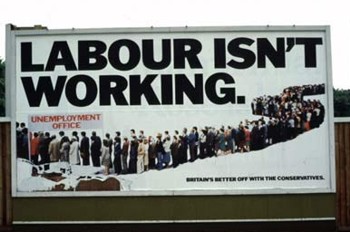
Just like how it was a foregone conclusion that Labour would win the general election in 2005, the question was only by how much, it was much the same in Crewe and Nantwich yesterday. The swing to the Conservatives was slightly less than 20%, but the more stark figure was the majority of over 8,000. Mid-term blues, economic woes and everything else besides, to go from having a 8,000 majority in one of your safest seats to being beaten by over 8,000 votes three years later is nothing short of a catastrophe.

While the above and the horrendously bad Labour campaign strategy are the main reasons for the loss, it's the crystallisation of everything that has been wrong with New Labour which makes this defeat different. At long last, the hollowness of Labour's words has been exposed, and by, in the unpleasant euphemism, Labour's "core". New Labour's election strategy has been simple and up till now effective: firstly, stress economic competence and how wonderful the end of boom and bust has been, as well as the spending on public services; second, be as authoritarian on law and order as possible without pissing off the Grauniad-left too much and without pleasing the Sun/Daily Mail enough; and lastly, make clear how awful it would be if those Tories got back in.

All three of these things were in evidence in Crewe, except the economic confidence line had been reversed. Rather than stressing how wonderful everything is, which would be suicidal, the decision was to put that Brown and his puppet Darling would make everything all right again after the "global" circumstances have calmed down. This has always been a specious line when Northern Rock has been one of the biggest casualties of what used to be called a crisis of capitalism rather than a "credit crunch", and this was brought home by the anger in Crewe about the 10p rate, hitting home just as the bills are beginning to pile up. All of Labour's huffing and puffing over criminal justice policies in the past few months, the Daily Mail bribing over cannabis, Jacqui Smith's advocating of the police behaving in exactly the same way as the "yobs" themselves and the continuing, bizarre, obsession with 42 days, none did anything to placate the electorate, and nor did the blatantly xenophobic and insulting playing up of how the Conservatives don't support ID cards for either foreign nationals or us lucky normal citizens. Last, the playing up of the "toff" card was the substitute for "don't let the Tories wreck everything" ploy and it was both so pathetic, so desperate and so vacant that it should have been the final straw for the activists themselves.

The loss could have been mitigated somewhat if Labour had bothered to notice just one or two things. If you were going to do a personal attack, don't be so staggeringly obvious and unsubtle. Instead of targeting Timpson for being well-off or a "toff", attack him for being another identikit Tory politician in a sharp suit in either his 30s or 40s who doesn't seem to know what he's talking about other than what he's told by the higher-ups. Timpson's winning speech was stunning in its crassness and triumphalism; some might say he's entitled to be after such a campaign, but all I saw was the sneer which so often also appears to be on the face of George Osborne, who he more than resembles. It was impossible to do this though because of Labour's biggest mistake: Tamsin Dunwoody herself. If Timpson was unpleasant, then the fourth(?) generation of the Dunwoody political clan was both charmless and sour. Again, perhaps being given such a poisoned chalice excuses her mood somewhat, but being so directly to interviewers as she was is not going to help you win over the floating voter. Gwyneth herself might have had those qualities also, but she made up for them through her independence and contempt for New Labour, neither of which her daughter obviously had, as the campaign made clear. After all, what is more contemptuous, imposing a rich boy in a suit on a working-class town or a party which is meant to be all about equality and the dead-end of meritocracy sticking another Dunwoody on the ballot and expecting the electorate to not notice the difference?

Moreover, Labour missed the most gaping, open goal since the footing slipped from under John Terry on Wednesday. In one of his rare forays into the hostile world of the normal person, or at least those inclined to give him a harder time than others seem to, David Cameron was faced by an almost Paxman-esque local who demanded, three times, whether the Tories would reinstate the 10p rate. Each time Cameron refused to answer, for the reason we all know being that he and the rest of his party couldn't give a stuff about it in actuality but are playing on it because of the damage it's caused. How did Labour fail to seize on this, and not make clear that the hole had been filled (somewhat) and that the Conservatives were not even offering any solid policy on what they would do other than keep public spending at the same level as Labour initially before moving towards "sharing the proceeds of growth"?

Granted, doing either of these things was not going to win the seat for Labour. With a better run campaign however, it could have at least stopped the swing being so damaging that it really does look as if it's curtains, if not for Gordon Brown immediately, then definitely for Labour itself. Credit due to Cameron, he has the same knack as Blair occasionally did for capturing the moment, and his declaration that "this is the death of New Labour" is now going to be next to impossible to shake off. Coming with another wounding performance in the Commons on Wednesday, where Brown walked straight into Cameron's trap, for all his lack of difference with the Blair vision of a modern politician, Cameron now looks almost unassailable as the next prime minister. As others have stated, this result is still not a vote of confidence in Tory policy; it's still far too sparse for that. What it is however is a sign that voters now think that Cameron and his party are worth a go, so fed up have they become with Labour and also, sadly, Gordon Brown himself.

I say sadly because I still think that Brown had the qualities to be a great prime minister. Unlike Blair up until his messianic streak took him wholly and Major entirely, Brown does believe in what he's doing, and always has. He's however stumbled into the top job and not found it like he thought it would be; no longer can he play like he's still in opposition like he did at the Treasury, running an insurgency against Blair and his worst attempts at pitiful and needless reforms, making the right arguments and often winning. He can't distance himself any longer from the government as a whole; he is the government, and his continuation of the worst of Blairism while not making the changes he's promised has brought both the party and himself to the brink, although it was always Blair that did the damage in the first place, and continues to do through the memoirs and constant recollections.

Again then we go through the suggestions, advice and in some cases, pleas from both outsiders and insiders on what he needs to do. Again there is no sign that Brown is really listening. Both John McDonnell on the socialist left and Compass on the soft left urge and urge again that they stop the dismal triangulation and return to Labour's roots. Last week's draft Queen speech showed that Brown has no intentions of doing that, and he's hardly going to rip that up and start again. It would actually make him even weaker if he did that, welcome as it would be. The least worst thing he could do would be a reshuffle: acknowledge the walking disaster that is "Wacky" Jacqui Smith and sack her; get rid of Hazel fucking Blears and send her to the gulag; perhaps move Jack Straw to be chancellor; and swallow his pride and bring back some of the old big beasts, like Alan Milburn, Charles Clarke and Frank Field, if only because it's better for them to be inside the tent pissing out than outside pissing in. Then more or less do what was suggested after the local elections, by getting rid of ID cards, bringing the troops back from Iraq, scrapping 42 days and most radically of all, abolish tax credits and raise the very poorest out of tax altogether while helping the reasonably well-off that also benefit through taking away in the first place less, all raised by either a windfall tax on the obscene oil/gas profits and/or by taxing the rich and especially the super-rich more.

All of this would completely wrong foot the Tories. They could play it as desperation and it might work but it would also truly show Brown to be listening. However, as we've seen time and time again when politicians have promised to listen, all they've done is carry on just as before. With no real chance of a leadership challenge, and with even the possibility of one only turning the electorate off more with the party gazing at its navel, Crewe and Nantwich along with David Cameron seem to have written Labour's epitaph.

Labels: , , , , , , , ,

AddThis Social Bookmark Button

Wednesday, May 14, 2008 

Tax cuts and yet more almost irrelevant legislation.

For what most of the press have presented as a panic measure, yesterday's move by Alistair Darling, or rather Gordon Brown skilfully manipulating the chancellor's strings, to raise the personal allowance by £600 to £6,035, a tax cut in effect worth £2.7bn, was reasonably inspired and probably the best option to mostly end the 10p tax cut debacle. It was what plenty have been arguing for all along: a honest, transparent and simple move that takes more of the working poor out of paying tax altogether, whilst not penalising middle earners at the same time. This was the opposite of what Brown, the supposed champion of anti-poverty measures had done in his last budget, the about-turn performed by his weak puppet. If this is the sort of thing that weak chancellors do, then we could do with more of them.

This isn't to forget about the downsides of the move. Firstly it does to a degree show the government panicking over the possibility of losing the Crewe by-election, but it also shows them genuinely listening to people's concerns, as Brown and others less than convincingly promised. More important though was compensating those who have lost out who should never have done in the first place, and if it just so happens to be done prior to a by-election which has become almost a referendum on Brown's stewardship of the country, then so be it. Secondly is that it sadly won't be fully compensating everyone that did lose out, with up to 1.1 million only getting half back. More must be done for them come the pre-budget statement in the autumn, but the issue does now seem to have been firmly closed, something that previous attempts at buying off both the rebels and the country at large had failed to do. Thirdly it puts the government perilously close to breaking its 40% of GDP borrowing rule, the tax cut coming as it does through lending, but almost any other means of compensating would have been either seen through for the con it was, left many still feeling short-changed even if they hadn't been or taken the best part of two years to come through, something entirely unacceptable. It has the added bonus for Labour of shooting the Tories' faux-plight for those who lost out under original change stone-dead, with Cameron always making clear that he would make no promises to restore the 10p tax band. Darling hasn't done that either, but he's done something better that the Tories at no time suggested.

If that was part one of the planned fightback, then part two was today's announcement of the draft Queen's speech, and understandably it had none of the dramatic effect or chutzpah of yesterday's gamble. Instead we have an almost congealed gloop of left-over, stolen or back of the fag packet style bills that hardly present a coherent programme of government. That is to be somewhat expected half-way through a parliament, but when it's also meant to be kick-starting Labour's hopes of getting re-elected in two years' time, it was mostly a squib of the damp variety.

One of Labour's worst tendencies has been to legislate, legislate, legislate and reform, reform, reform then think of the consequences later. We can see this in the continuing attempt to force through longer detention without charge, the use of various parts of Home Office legislation for purposes which they were not intended, the hospitals and schools sick to the back teeth of new initiatives when they haven't gotten used to the last one, and most egregiously, the banning of demonstrating within a mile of parliament, now due to be repealed in the latest constitutional renewal bill. The best political idea of recent years was the Liberal Democrats' pledge to have a bonfire of the very worst illiberal legislation placed on the statute books, and both Nick Clegg and Vince Cable have been making the same argument again today on the quantity rather than the quality of new bills. Their list at the time of what to repeal would still be a great start today, although you can also add the now tragically passed "extreme pornography" sections of the last crime bill to the things to burn.

In lieu of that happening, it has to be said that most of the bills at least have their heart somewhere in the right place. The problem with this pre-Queen's speech announcement is that at best we're given a very shady outline of what's actually going to be in the legislation once it reaches parliament, but on what we know the banking reform and saving gateway bills are steps in the right direction which seem unlikely to come across many hurdles. Of more concern and contentious are bound to be the equality bill, especially the part concerning the all-women shortlists which, despite having the right intention are not the way to achieve equality in parliament; the welfare reform bill, where it's not clear whether the government is "borrowing" the Conservatives idea of needlessly and wastefully re-assessing everyone on incapacity benefit but where they are forcing the long-term unemployed onto "training courses" they have most likely already taken; the policing and crime reduction bill which will introduce yet more crackdowns on "anti-social behaviour", binge-drinking and also "cut red tape", which might well mean the scrapping of the current stop and search mechanism; the Citizenship, immigration and borders bill which will likely toughen still further the steps towards citizenship; the communications data bill, introducing the EU's intrusive demands on data retention on ISPs and the like; and the coroners and death certification bill, where it's still not clear whether the government will relent on its much criticised changes to the coroner's system which mean the Home Secretary can order "sensitive" inquests to be held without a jury.

While this programme might have been intended to add detail to yesterday's decisiveness, it's certainly done nothing to curtail the Tories' spirits, and their response has been emblematic of that. Why, the government is so desperate that it's taking up to 12 of our ideas and putting them to good use was the cry from the opposition benches, and it's one that's not wholly unfounded. While such populist ideas as directly elected representatives that deal with the police can either work well or fail abysmally, there's little here that's immediately going to be opposed on ideological grounds alone, although the pledge to give agency workers the same rights as regular ones, which again needs to be fully fleshed out, might have the Tories pause for thought. There's the saving gateway bill and the social housing plan for government to put up equal amounts as the potential buyer to appeal to the Labour left, but the rest seems almost devoid of colour, limp, lifeless, dull and decent, as someone else suggests.

Some will argue perceptively that that's exactly what Labour needs to do at the moment, to abandon the high risk strategy of eye-catching new initiatives which the Blair years foisted on us time after time, and just concentrate on governing effectively and competently. The other side to the coin is that also suggests a government running on empty, with nothing new to offer, while the increasingly confident opposition only seems to building on its gains. As usual, the reality is split down the middle, with a party that neither knows whether to go all-out or to just carry on. It seems unlikely in the long-run that this latest programme will make any great difference: as before, the next election is now the Tories to lose, and with nothing left in either the kitty or the bag, Brown looks just as isolated and lonely as before.

Labels: , , , , , ,

AddThis Social Bookmark Button

Tuesday, February 05, 2008 

This is Flint, Caroline.

Politicians and statesmen often get attributed statements that they never actually made. It's unlikely that Queen Victoria said "We are not amused." Lenin didn't directly use the term "useful idiot". Callaghan never said "Crisis? What crisis?" Norman Tebbit never actually said for the unemployed to get on their bikes and look for work, but along with the Spitting Image puppet of him and cartoon depiction as an undead, skeletal figure (he has never fully recovered from being injured in the IRA Brighton bomb of 1984) attempting to sell the poll tax, it entered the lexicon. Caroline Flint has come up with nothing quite as catchy, but the message is almost certainly the same, and the Guardian's headline will do the job for both her and her party. Labour: if you want a council house, find a job.

As with most headlines, it doesn't really cover the full effect of what she said or the position she's apparently taken. The gist of it is, either you look for work and sign a contract to say that you will, or you won't get a council house. Flint repeated much the same message at a speech to the Fabian society today. (The Fabian society? Have supposedly social democratic organisations in this country really sunk so low?) This approach was apparently sparked by the revelation to Flint that half of those living in social housing are without paid work, which is twice the national average. When it comes to those under 25, it rises to three quarters.

On the face of it, there is an apparent problem that does in some way require fixing. The figures quoted though may not tell the full story. Are we talking about those who are the actual tenants, paying rent to the council, or just those who live in the house as well as the tenants? If so, it might go some way towards explaining why the numbers are larger. I don't have any figures to hand, but one would estimate that more people tend to live in an individual council home than they do in "private" accommodation. Indeed, we're informed that more and more households now consist of just the one person, younger singletons and the older retired generation alike. That may go some way to explaining the disparity.

Otherwise, it seems a typical New Labour solution right down to a t. As with those accused of anti-social behaviour, schoolchildren and parents with schools, and who knows, maybe even all of us once the government gets round to deciding exactly what our "rights and responsibilities" are, those who are on the waiting list for a council house (and it's usually a long wait) will be required to sign a contract stating that if they aren't in work they'll be expected to seek it, as well as undergoing a "skills audit", which probably sounds more threatening that in would be in reality. The government appears to be obsessed with either belittling or infantilising everyone; call it the sweets equation, or the Santa threat. The parent tells the child to behave or they won't get any sweets, or alternatively, that if they aren't a good little boy or girl, that Santa won't come. The difference is that they tend to be empty threats, especially the latter. With New Labour, you can bet that it won't be anything of the sort.

Flint has been accused of stigmatising council estates and those who live in them, and it's difficult to disagree with that conclusion. Certainly, the quotes she's given in the Guardian show both a lack of understanding of council housing works and how the system has been evolving, or rather been privatising as of late:

"It would be a big change of culture from the time when the council handed someone the keys and forgot about them for 30 years."

If there was one thing that councils don't tend to do, it's forget about those living in their housing. If they did, there wouldn't be buses going round where I live with the pre-festive message (I might paraphrase slightly) of "Looking forward to Christmas/buying presents? Pay your rent first. We do evict!" Nor have they forgotten about them when it comes to proposals of whether to selling the housing to a private landlord, or to stay under local government control, as Defend Council Housing have been campaigning for.

Then there's this:

"If you are in a family, an estate or a neighbourhood where nobody works that impacts on your own aspiration. It is a form of peer pressure."

What utter rubbish. I'm sure some are defeatist about it, but for every person that is there's another 3 or 4 that want to get out of the cycle of not working. The key word there is of course "aspiration"; both Labour and the Tories deeply care about the aspirations of the upwardly-mobile lower and middle-classes, who demand less tax and policies tailored directly to them as they make up the all important swing voters, but for those on the council estates who make up the bulk of Labour's vote, they can be played off, stigmatised and chastised for their fecklessness and welfare dependency, which is naturally all their own fault. It certainly also helps that the Mail and Scum lap up such rhetoric.


Less prominent but no less questionable was Flint's proposal for jobcentres to moved onto the estates themselves. Reasonable enough, and I'm sure they'll fit in just fine alongside the Ladbrokes, Coral, BetFred and others that have prospered under New Labour's relaxation of the gambling laws and which now seem to make up the majority of the shops on such estates. More typical was that the private sector will of course be given more of a role, as after all, you can't trust the public sector to be tough enough, especially when you get investment bankers called Freud to do the appropriate reviews.

It has surely come to something though when it's the Conservatives that appear more moderate on such a matter, although Grant Shapps didn't exactly shoot it down, just instead that it was political kite-flying and that it was unworkable. That isn't the point though; for all Flint's pleading that this wouldn't affect the fact that council housing is a safety net, it suggests where government thinking is going, and that's away from further building of social housing, despite how badly it's needed. Quite simply, it costs too much while those who live in it aren't giving enough back. You'd expect that sort of argument to be made by the Tories, but not from Labour, even New Labour. Flint and the prime minister's spokesman have since backtracked slightly, saying that the intention was starting a debate, even a provocative debate in Flint's case, but that seems to only suggest that they weren't expecting such a fierce backlash, or at least the intensity of it. Whether it really has changed minds or not is something entirely different.

Coming after last weekend though, when Progress said that Labour could no longer rely on portraying the Conservatives as the "nasty party", it suggests something else. That Labour seems to be more than happy to try and earn that sobriquet for itself.

Labels: , , , , , ,

AddThis Social Bookmark Button

Tuesday, November 06, 2007 

Around as enthralling as a dead dog.

Part of the reason why the Queen's speech (how much longer does the ridiculous and inane opening of parliament have to continue? Until Brenda's legs stop working?) was both so underwhelming and stale was that we really had heard it all before. As part of Brown's initial attempts to re-engage the public and prove how he was nothing like that control freak Blair was to "preview" the bills likely to be announced before the rise of parliament in the summer. All well and good, but it allowed David Cameron to continue his similarly moribund claims that Brown is offering nothing new. Reasonably accurate, but then neither are the Tories.

For once, the Tories actually have something of a point over their opposition to the extending of the compulsory education age to 18, which will be enforced with a great big stick rather than carrots. Those who refuse to turn up will get fined - the perfect way to enthuse our disillusioned youth with the idea that it's for their own benefit. Either you turn up or we take the (tiny) amount of money you might be earning. The next year will see reforms to secondary education that might well help with the actual problems faced: that at 14 most are already either so disenfranchised with school or accepting of failure that they don't even try. The introduction of diplomas, both vocational and academic, could prove to be vital. At 16 currently, those who go on to colleges or sixth forms are generally those who want to learn; the compulsion to keep learning until 18 will remove the relief that many feel on leaving behind those who either were disruptive or simply unpleasant. It's not their fault, it's that they're currently be failed by the strictness of the system, either taking the academic route with GCSEs or the more vocational course with GNVQs, which are decent qualifications but not worth the number of GCSEs they claim to. Getting the mixture between the two right will do far more to improve results than any threat of compulsion. By 2015 it might have been achieved, but I'm certainly not holding my breath.

As noted in the previous post, Labour is currently far too cowardly to come out with how it wants to double the pre-charge limit for "terrorist suspects", although everyone knows another battle is ahead. The latest knee-jerk on the criminal justice front is violent offenders' orders, which are bound to trouble the courts, while the sop to the tabloids is the long trumpeted and downright illiberal banning of "extreme" pornographic images, in the BBC's lexicon, which means the banning of "dangerous pictures" in actuality. The only truly radical piece of legislation is the climate change bill, and it's likely to be not radical enough.

It makes you wonder whether the government really was so set upon that autumn election, built around Brown personally, that it didn't bother to come up with any actual policies or details, both of which were wholly lacking today. This was less a vision than a panicky brainstorm in the middle of the night after Brown realised he'd forgotten all about having Brenda reading out his plans for the next year. There was talk of meritocracy, getting in tune with the aspirations of the people, but behind those rhetorical flourishes the bills themselves were as flat as the Queen's voice. It's a shame that Vince Cable is himself lacking in gravitas, as his spell as stand in Liberal Democrat leader has been something of a success. He certainly got it right on the tepidity of today:

"The anticipation was acute - but the anticlimax is deafening. The legislative programme is firmly rooted in the Blair era. There is very little new. No ideas, no vision. Is this what we have been waiting for?"

"The one-time editor of the Red Paper has penned a Queen's speech in the bluest ink. Across wide swathes of policy, his approach is indistinguishable from the Tories."

This though is intended. When the Electoral Reform Society identifies that the election could have been decided by 8,000 voters, the cross-dressing and tailoring of policies to those that most turns on the exalted floating voter is only natural. The lack of choice is acute, but no one's prepared to move beyond that dead end of radical centrism.

Labels: , , , , ,

AddThis Social Bookmark Button

Thursday, September 27, 2007 

The same old shit, rehashed, reheated and served up for all to devour.

If this week's Labour conference was meant to impress upon us how wonderfully different, changed and confident the government is and how they most certainly deserve to be re-elected, then they've done the equivalent of Darren Murphy and fell flat on their faces. From Brown's dirge on Monday to Miliband's miserable monotony on Tuesday, this is a government not just lacking in new ideas, but just as prepared to clamp down on dissension as the old one was. With the spineless unions acquiescing and deciding that those embarrassing critical motions only brought trouble, the votes have disappeared and so has the passion with it. Blair hasn't just been airbrushed out of the picture as so many others have noted, all his policies have been either been getting a kicking even though they haven't been changed or are even being prepared for change, while the rest have been completely ignored, meaning Iraq and Afghanistan have hardly been mentioned, while the "rules of the gaming are changing" turning point has been rubbished even though the ministers have no intentions of actually going back on what came directly from that speech.

According to Tony McNulty then, the rules of the game haven't changed. One would assume from that that it would mean the end of trying to deport "terrorist suspects" back to countries where torture is endemic, articles of understanding or not, the admittance that we have been involved up to the neck in "extraordinary rendition", despite constant laughable denials, and that such flights will never be used nor allowed to land here again, the instant repealing of the ban on unauthorised protests within 1km of parliament, the declaration that 28 days detention without charge is plenty of time for the police to build a case against "terrorist suspects" and that intercept evidence ought to be made admissible, as long as a thorough review gives the OK. As so often with this government, they can when they think it's useful sweet talk their nominal opponents, even Shami Chakrabati, who supposedly called McNulty's rhetoric "music to my ears". Too bad then that Jacqui Smith today yet again brought up the phantom of "seek[ing] consensus on new measures to counter the threat of terrorism", which in other words means they're going to try to ram through a doubling of the time limit like they've always said they would.

Such double-speak seems to have been the order of the day. Jack Straw's sudden decision to review the laws regarding "have-a-go-heroes" is a classic of the gesture politics genre, broadly comparable to the reviewing last year of whether a "Megan's Law" could be introduced here, to which the predictable answer was no. Prosecutions over someone defending themselves, especially in their own home or place of work are incredibly rare because the law already covers acts that are proportionate and reasonable, which quite rightly doesn't cover shooting burglars that are running away in the back. His talking up of his own experiences in stopping crime, which I'm pretty sure every single one of us have at least one, seems to be an attempt to conjure up a tough man image which he never had while Home Secretary before and isn't going to gain now. Besides, what better way to get the Mail and Scum interested than tell them that they can do whatever the hell they like to an intruder or mugger? It'll come to nothing, but it might help in the short term.

The same logic seems to be behind Jacqui Smith's mentioning of zero tolerance, which was all the rage about a month ago in the tabloids when Rhys Jones' murder predictably caused a session of why-oh-whying and how cracking down on youths' hanging around on corners and spitting on the street will naturally mean that they'll be too scared to shoot one another. She drops in a reference on drug treatment to make it slightly more amenable to the wet liberals like my good self, but it all sounds so laughable when the prisons are full of those unable to get on those programmes, as a result wasting away in cells, stuck in the recidivist cycle. For any sort of zero tolerance to be implemented, prison places would have to vastly extended even further than already proposed, itself unlikely to backed up with the necessary cash from the Treasury, not to mention the overcrowding chaos which is already exacerbating re-offending. Even more draconian sentencing for minor offences will only make the situation worse. Additionally, at a time when we learn that there are over 800,000 DNA profiles from children aged between 10 and 17 on the database, we can only imagine how the rolling out of "mobile fingerprinting devices" will quickly even further extend the database with the data of those who are never actually charged. Smith ought to know better than to ask "what sort of politics is it to incite fear and alarm?" of the Tories, because after all, that's been Labour's job for the last 10 years.

The strength to change Britain, the tagline of this soporific conference, seems to involve all the effort of going to the microwave and heating up a takeaway left over from the night before, drunkenly forgotten about. The reheating of old, forgotten or rightly discarded policies for the on message comrades might be enough, but for the rest of us it's just a reminder of a party that still doesn't know where it wants to stand and is terrified of being denounced for choosing.

Labels: , , , , , ,

AddThis Social Bookmark Button

Tuesday, September 11, 2007 

The poverty of prohibition.

It was a weekend of bad ideas, as Alan Johnson's bung for mums illustrated, but on the scale of denseness it's hard to beat the currently only being floated as part of a longer-term action against prostitution idea of making the buying/paying of sex illegal.

Putting aside for a moment there's a reason why women selling their bodies is known as the world's oldest profession, this idea takes its cue directly from the deeply discredited and fatally flawed part of radical feminist ideology that maintains every woman working in the sex trade, whether involved in producing pornography or working the streets is a victim of some sort. Like all the usual strong but deeply misguided ideological positions, it has more than a merit of truth to it: you only had to see the five murdered prostitutes in Ipswich last December, all addicted to one or more drugs, to see that they were victims who needed help. To apply this universally though is naive, discriminatory and even possibly misogynistic. Cast your way through any local newspaper's classifieds, and you're bound to find a whole cavalcade of advertisements for saunas, escorts and women working from flats, almost all of them selling sex, and the vast majority also doing it out of choice.

Radical feminism in general doesn't have an answer for why these women choose to do what they do, so it more or less treats them as though they either don't exist or as traitors to the cause, in it for the money. The irony of this is that those women are the ones with the most to gain from any ban on the buying or the selling of sex; the ones who don't need to walk the streets, hidden away from the gaze of CCTV cameras and the police are already the ones doing the best out of their work, reasonably to excellently paid and able to argue out their own terms. A ban, as well as naming and shaming, also proposed, would only drive the curious kerb-crawler far away from those women who survive by selling their wares on the streets, leaving them far more vulnerable than they already were. If trade dries up, their drug habits or men demanding money don't, pushing them to shoplift or commit other crimes, only making it more likely that they'll become the latest additions to our already overcrowded prison system.

This policy isn't just based around the notion of victimhood though, it's also based on the farcical assumption that you can somehow control human urges through legislation, and also that the selling of sex itself is morally wrong. You can't outlaw the fact that some men either can't or won't develop normal relationships and so use prostitutes on that basis, nor can you stop the philandering bored husband from visiting the local massage parlour, let alone the increasing fad for stag parties to visit European capitals famed for their red light districts. In fact, it's wrong to assume that it's just men using women; while it's on nowhere near the scale of female prostitution, there are more than enough male escorts out there, available for use by both men and women.

After all, it's not necessarily that men are exploiting women; in some cases it's quite the opposite. What is heterosexual pornography if it isn't a woman using what she either was given or bought to extract money from males who simply can't help themselves? It's them taking the money off idiot males who go goggle-eyed at the mention of all those acronyms that make up the specialist end of the market, rather than being exploited by the men invariably involved in running the actual business. The American pornography industry is remarkably self-regulating, thanks to measures brought in during the 80s after the Traci Lords scandal, and the notion that women are being forced into doing anything they don't want to over there is laughable.

Primarily, the government is concerned by figures that supposedly show that 85% of women working in brothels are from foreign countries, and takes this as proof that forced trafficking is endemic. On the contrary, it rather shows that some of these women know full well that they can make decent sums of money in a relatively short time, far beyond what they'd ever earn if they did the menial jobs most of the other migrants from within the EU are coming here to do, and without any of the stigma of walking the streets back in their home country and without their families knowing what they're actually doing. It's undeniable that some women are being effectively kidnapped and then forced into prostitution by gangs who bring them here, but the numbers are tiny compared to those who are actually more than willing to come here for similar purposes.

It's hard not to imagine that as well as appealing to the more feminist thinking members of the cabinet, it's also something that Brown and his "moral compass" couldn't help but be attracted to. Previous plans by the government that suggested allowing women to set-up mini-brothels where three could work, away from both the streets and predators of all kinds were predictably loudly condemned by the usual suspects, i.e. the Daily Mail, etc. Out the window goes Blair's lack of any principles and in comes the clunking fist's crackdown on vice, whether it be in the form of gambling, drinking or sex.

As Diane Taylor points out, the very last thing that will change the current landscape of prostitution, except for the worst will be the criminalising of men who pay for sex. Prostitution is such an intractable problem, without any obvious solution that it's easy to jump to the obvious reactionary position. Until we start valuing drug treatment programmes as much as we do prison cells, and providing real alternatives to street walking as we do to the thump of the gavel, nothing will be any different. And you're sure as hell not going to stop men from seeking out sex, unless you castrate them all at birth, which brings with it other problems.

Related post:
Stumbling and Mumbling - New Labour's misogyny

Labels: , , , ,

AddThis Social Bookmark Button

Tuesday, March 06, 2007 

What's the point of the Liberal Democrats?

Honest, it is.

Confusion still reins over Menzies Campbell's less than impressive speech to the spring conference, with its talk of "five tests" which Gordon Brown has to meet in order for him to have risen to the challenge of believing in "liberal democracy".

The real debate has been over whether the initial briefings, which appeared to suggest that in the event of a hung parliament the Lib Dems would not insist on a form of proportional representation being introduced in return for them forming a coalition with Labour reflected the party's true priorities or not. For the last God knows how long, the two Lib Dem policies which almost anyone could name and knew about were a 50p top rate of tax on those earning more than £100,000 a year, and the electoral system being reformed from the first past the post system to one in which every vote counts. In the past year, the former has been abandoned in favour of "green taxes" and now PR itself has quite possibly been rejected in favour of power for power's sake.


While there were questions over how the 50p top rate would affect key workers, Labour raising the point of nurses in particular, and over whether it would further encourage the rich to squirrel away their earnings in tax havens, it was one of those key redistributive measures which genuinely made the Liberal Democrats different to both Labour and the Tories. Likewise PR, especially when
you consider only 22% of the electorate voted for Labour at the last election, yet it still managed to win a majority of over 60 seats. Something is quite clearly rotten, and the electoral system is part of the problem. First past the post is at least one of the reasons why the oxymoron of "radical centrism" is preached by Clarke and Milburn: a voting system which meant there was no such thing as a "wasted vote" or a need to vote tactically would radically alter the political landscape, meaning the parties would no longer have to pander only to the wants of the "aspirational" voters who make up the difference in the "ultra-marginals" which the Blairites have been crowing of. This might be frightening to how both Labour and the Tories have become comfortable in listening only to those who care about no else apart from their self, but it would be liberating for the rest of us.

It's true that
Ed Davey, Menzies' chief of staff, stated that PR remained "critically important" to the party, but the woeful lack of any mention of the policy in Ming's speech may well have spoke volumes. When you have a decent, noble and urgently needed policy, you shouldn't be afraid either of mentioning it or preaching about it. If the Lib Dems wanted to gain the support of a substantial part of the population, they'd make perfectly clear that in the event of a hung parliament, they would join a Labour government, but only if PR was introduced in return. While this would be open to the criticism of propping up a Labour government that had run out of steam, it would at least mean that the next election would be fought under completely different conditions, with a new set of policies likely from each party as a result. It would be a significant boon for democracy, and one which the Lib Dems may well be remembered for long after all our brains have turned to mush.

Instead, Campbell's speech to the conference was disheartening at best and woeful at worst. The Liberal Democrats are meant to be the party which comes up with the fairly radical policies which are then pinched without thanks by the Tories and Labour. Ming's five tests, by comparison, weren't potentially bad assessments of how Brown intends to govern, but they were far from being individual to the party itself. The Tories pledge to scrap ID cards, have moved opportunistically but reasonably credibly towards taking on climate change, and have made clear they would advocate a more distant foreign policy from that of Washington, three of the tests which Campbell set out. It's true that the Tories are about as likely to act on poverty, the third test, as Labour is to neuter Murdoch, and we've yet to learn properly about Cameron's views on where the Tories stand on devolving power, but it's not exactly a clean break either, is it?

The whole thing smacks of the Lib Dems drifting rather than leading.
Opinion polls have showed there's a large amount of support for scrapping Trident, and while there's at least something prudent about waiting a few more years before making a decision, the decision to do just that instead of setting out now the reasonably compelling arguments for disarmament, in the face of a Labour and Tory axis which means that Blair's replacement plans are going to be passed whatever the Lib Dem policy suggests that Ming may well not be up to making the difficult but important policy stands. We already knew about his hesitation over Charles Kennedy's decision to go on the anti-war march back in 2003, fearing that he/they might be painted as anti-American, but it was instead one of the party's finest hours.

The question for Campbell, with the Tories surging, is just how he justifies the party's continued existence. The country is crying out for a decent centre-left alternative to Labour, and there's plenty out there who'll either never vote for the Tories again after Thatcher/Major or because they don't trust "spliffy" Cameron's Blair impression. At the moment, instead of pushing ahead and challenging the Tories to make clear how far their newly re-found social libertarianism goes, Campbell seems content with coasting. His leadership ethos isn't being discussed yet, but if the current situation continues for a few more months, it certainly will be.

Labels: , , ,

AddThis Social Bookmark Button

About

  • This is septicisle
profile

Links

Archives

Powered by Blogger
and Blogger Templates