Legislation which doesn't amount to a hill of beans.
One of the more cutting attacks of recent months on the government came not from the Conservatives but from that other continual provider of friendly fire, Frank Field. Writing about government business which was slowly winding its way towards conclusion, he said "week after week MPs have been turning up but with almost no serious work to do. There is the odd bill to be sure. But there is no legislative programme to speak of ... the whole exercise is vacuous."
The problem with Field's criticism is that it assumes that fresh legislation is the be all and end all of government, and it has indeed become one of the key measures by which they are judged. This misses the point that it is not the quantity of bills which are passed, and New Labour has in the past been rightly accused of legislative mania, but rather the quality, on which Labour again falls down on. The immediate answer to passing frenzies and quick to evaporate moral panics is always to get something on the statute book, regardless of how those laws will end up being used and the overall effect they will have. The shining example remains the Dangerous Dogs Act, passed after a tabloid campaign and which outlaws entire breeds of dog, regardless of the dog's own nature. Last year's knife panic brought demands for anyone carrying a knife, regardless of age or reason, to be sent to prison, something which most judges are still rightly either ignoring or evading.
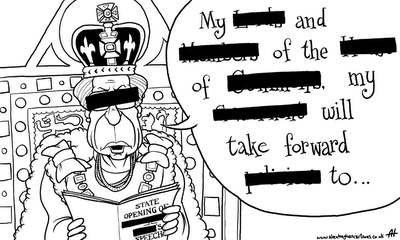
With this in mind, some criticism of what amounts to the next Queen's speech announced yesterday would be unfair. Who can blame a government in uncertain economic times, when it doesn't frankly have a clue how much money it will eventually have to play about with, from not having the most ambitious legislative programme mapped out? Added to this is that we are now less from a year away from an election, where the real big reforms and changes will doubtless be held over to put into the manifesto, and you're likely to be left with what is tinkering around the margins, dropping some of the more unpopular formerly proposed initiatives, with part-privatisation of the Royal Mail postponed and ID cards now not to be forced on anyone (although the real problem all along, the database, will still be around) while also attempting some populist gestures such as allocating more money to social housing building.
As of course this though is New Labour, they can't help but add some very real stings in the tail. The added measure in the housing commitment to make sure that "local residents" are first to be considered for new council homes has only one target, and that is the persistent myth, mined ruthlessly by the BNP, that migrants, asylum seekers and foreigners have the first crack of the whip. It's true that all councils have to bump up those who are in genuine need, whether homeless or otherwise, up towards the top, but asylum seekers and migrants are excluded from the very beginning until they are given leave to remain. Only 5% of social housing is allocated to foreign nationals, but this hasn't stopped the repeated claims that this isn't the case. That the government has now given succour to the idea, regardless of whether or not they also point out at the same time that it isn't true, it's the sort of legitimisation which the BNP and other discontents thrive upon and which they will be pointing out for years to come. It might not be entirely fair to call this "British homes for British workers", but it's not far from it.
Much the same is the case with the kind, generous, selfless gesture which is the offer of a job or training to the young who have been unemployed for over a year. Not a new announcement, but the stick being wielded is. Those who refuse a job, presumably regardless of what it is, will lose two weeks' benefit, and so on and so forth. The opposing argument will be that beggars can't be choosers, but putting someone into a job which they simply aren't suited to do is no solution at all. This conditionality was inherent in James Purnell's welfare reform bill, and it was just as damaging and potentially pernicious there as it is here. Most of those currently out of are work will welcome the possibility of a job, but not any job. One explanation for why this is especially being targeted at the young and out of work is that there is the potential to save money: tax credits, which eat into the savings made when the older out of work find employment, are not payable to those under 24. The government is therefore a winner regardless of whether a job is taken up or not.
Alongside the welcome retreat from the targets culture ingrained in the public sector under Blair, to be replaced by various rights to treatment or private tutors, although where the money's coming from is unclear, the most conspicuous absence is any real reform neccesitated by the expenses scandal. This might be for the better, as the beginning of this post argues, as legislation cobbled together in haste often fails all those involved, and it seems the current bill being rushed through is no exception, but for a prime minister who came in promising further constitutional reform, the final flushing out of the hereditary peers from the Lords is about as tame as it gets. It just confirms that as with the banking sector, parliament is getting back to normal, and far quicker than the City did. It can be argued that the public themselves didn't want major reform of Westminster, just an end to the gravy train, but at the same time it fails to answer the now critical insult that all politicians are more or less the same.
It's an attack which sticks, because all this latest package confirms is that Labour and the Conservatives are fighting a battle not over ideology, but over the little details. The key differences seem to be that the Conservatives will be slightly tougher, whether on law and order, foreign policy and the welfare system, and cut slightly more, except on health and foreign aid, and possibly education than Labour will. Little else really separates them. Neither is prepared to be honest about what they would cut, whether it's Labour who don't seem prepared to admit that they'll cut anything, or the Tories, who have no intention of telling just how harshly they're going to cut public spending. Here is where Alan Johnson's suggestion that there could be a referendum on voting reform at the same time as the election could have made so much difference. The promise that you would no longer be forced to decide which is the lesser of the two evils, with the Lib Dems joining the fray in certain areas, could have helped to suggest that there will shortly be a real choice. Instead we're fobbed off with the same old leftovers as before, regardless of which party is proposing what.
The problem with Field's criticism is that it assumes that fresh legislation is the be all and end all of government, and it has indeed become one of the key measures by which they are judged. This misses the point that it is not the quantity of bills which are passed, and New Labour has in the past been rightly accused of legislative mania, but rather the quality, on which Labour again falls down on. The immediate answer to passing frenzies and quick to evaporate moral panics is always to get something on the statute book, regardless of how those laws will end up being used and the overall effect they will have. The shining example remains the Dangerous Dogs Act, passed after a tabloid campaign and which outlaws entire breeds of dog, regardless of the dog's own nature. Last year's knife panic brought demands for anyone carrying a knife, regardless of age or reason, to be sent to prison, something which most judges are still rightly either ignoring or evading.
With this in mind, some criticism of what amounts to the next Queen's speech announced yesterday would be unfair. Who can blame a government in uncertain economic times, when it doesn't frankly have a clue how much money it will eventually have to play about with, from not having the most ambitious legislative programme mapped out? Added to this is that we are now less from a year away from an election, where the real big reforms and changes will doubtless be held over to put into the manifesto, and you're likely to be left with what is tinkering around the margins, dropping some of the more unpopular formerly proposed initiatives, with part-privatisation of the Royal Mail postponed and ID cards now not to be forced on anyone (although the real problem all along, the database, will still be around) while also attempting some populist gestures such as allocating more money to social housing building.
As of course this though is New Labour, they can't help but add some very real stings in the tail. The added measure in the housing commitment to make sure that "local residents" are first to be considered for new council homes has only one target, and that is the persistent myth, mined ruthlessly by the BNP, that migrants, asylum seekers and foreigners have the first crack of the whip. It's true that all councils have to bump up those who are in genuine need, whether homeless or otherwise, up towards the top, but asylum seekers and migrants are excluded from the very beginning until they are given leave to remain. Only 5% of social housing is allocated to foreign nationals, but this hasn't stopped the repeated claims that this isn't the case. That the government has now given succour to the idea, regardless of whether or not they also point out at the same time that it isn't true, it's the sort of legitimisation which the BNP and other discontents thrive upon and which they will be pointing out for years to come. It might not be entirely fair to call this "British homes for British workers", but it's not far from it.
Much the same is the case with the kind, generous, selfless gesture which is the offer of a job or training to the young who have been unemployed for over a year. Not a new announcement, but the stick being wielded is. Those who refuse a job, presumably regardless of what it is, will lose two weeks' benefit, and so on and so forth. The opposing argument will be that beggars can't be choosers, but putting someone into a job which they simply aren't suited to do is no solution at all. This conditionality was inherent in James Purnell's welfare reform bill, and it was just as damaging and potentially pernicious there as it is here. Most of those currently out of are work will welcome the possibility of a job, but not any job. One explanation for why this is especially being targeted at the young and out of work is that there is the potential to save money: tax credits, which eat into the savings made when the older out of work find employment, are not payable to those under 24. The government is therefore a winner regardless of whether a job is taken up or not.
Alongside the welcome retreat from the targets culture ingrained in the public sector under Blair, to be replaced by various rights to treatment or private tutors, although where the money's coming from is unclear, the most conspicuous absence is any real reform neccesitated by the expenses scandal. This might be for the better, as the beginning of this post argues, as legislation cobbled together in haste often fails all those involved, and it seems the current bill being rushed through is no exception, but for a prime minister who came in promising further constitutional reform, the final flushing out of the hereditary peers from the Lords is about as tame as it gets. It just confirms that as with the banking sector, parliament is getting back to normal, and far quicker than the City did. It can be argued that the public themselves didn't want major reform of Westminster, just an end to the gravy train, but at the same time it fails to answer the now critical insult that all politicians are more or less the same.
It's an attack which sticks, because all this latest package confirms is that Labour and the Conservatives are fighting a battle not over ideology, but over the little details. The key differences seem to be that the Conservatives will be slightly tougher, whether on law and order, foreign policy and the welfare system, and cut slightly more, except on health and foreign aid, and possibly education than Labour will. Little else really separates them. Neither is prepared to be honest about what they would cut, whether it's Labour who don't seem prepared to admit that they'll cut anything, or the Tories, who have no intention of telling just how harshly they're going to cut public spending. Here is where Alan Johnson's suggestion that there could be a referendum on voting reform at the same time as the election could have made so much difference. The promise that you would no longer be forced to decide which is the lesser of the two evils, with the Lib Dems joining the fray in certain areas, could have helped to suggest that there will shortly be a real choice. Instead we're fobbed off with the same old leftovers as before, regardless of which party is proposing what.
Labels: Building Britain's Future, Conservatives, death of Labour, fall of Gordon Brown, Frank Field, legislation, New Labour, politics
| Permalink