Friday, October 24, 2008 

Cooking the crime figures.

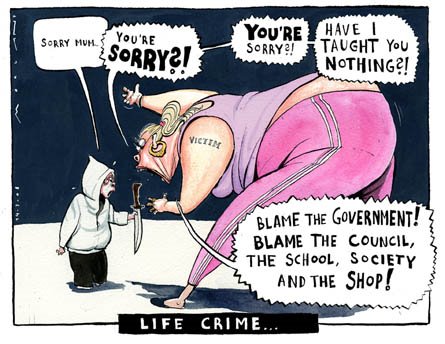
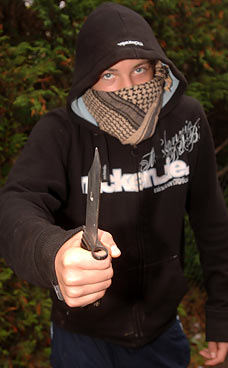
It's incredibly tempting to dismiss what appears to be little more than a misunderstanding based on confusion over what is and what is not grievous bodily harm with intent when it comes to recording crime as an understandable mistake and leave it at that. After all, the 22% rise in most serious violence against the person which comes from reassessing the figures involves just 1,000 more offences (PDF). As Mark Easton, and almost no one else additionally points out, with that 22% rise, accordingly there is a drop in the other offences against the person stats of 11,000, or 10% in offences with injury or 4% in offences with no injury. The figures as a whole again show a further drop in overall crime of 6% - on both the police statistics and the British Crime Survey interviews. The only real rises are a 28% rise in attempted murder with a knife, a further 8% rise in drug offences, again most likely down to cautions given for cannabis possession and a 17% percent rise in the BCS figures in theft from the person. Overall, the risk of becoming a victim of crime is unbelievably, considering the media coverage, at the lowest it has been since the BCS began in 1981 at 23%. Broken Britain this ain't.

You could however predict what the response would be to what is not lies, not a conspiracy, but honest mistakes, the classic cock-up. The government is not to blame; if anyone is, it's the police and Crown Prosecution Service for the complexity of what both consider as GBH with intent and what is not. No one as a result of the statistical errors was given a lesser sentence or charged with a lesser offence; the only crime committed here has been one of hubris. The government itself has become, quite rightly, it can be argued, increasingly proud of the fact that by both measures crime has dropped by a third since 1995. Why this has happened can be argued over, and whether Labour's policies are responsible is equally uncertain, especially considering that across the Western world over the same period crime has generally fallen, but any government regardless of hue would be trumping what has happened. Last time round however the government went too far, especially in the face of the rise of teenagers being stabbed to death on the streets of London,
and played up the fall in crime to such an extent that there was almost bound to be a reckoning come either the first rise, whether due to recession, which as the figures bear out has not yet happened, or the first mistake, which has come far sooner than they imagined.

Regardless of what any newspaper or politician will say, this will broadcast just one message to the public: that the crime figures can fundamentally not be trusted. It doesn't help when the Sun for example directly accuses politicians of lying and the police of hiding the true figures as if this was a conspiracy rather than the obvious cock-up, but it's the recounting itself that will cause the damage. It also fundamentally undermines everyone who does consider the numbers to be accurate, whether they be the police themselves, who overwhelmingly do not think that crime is rising, or the academics and policy makers that attempt to turn the evidence into something approaching a strategy.

What is not true is
that people do not believe statistics full stop. They do, but only as long as they back up what they think they already know. A fascinating survey conducted for Louise Casey's crime review found that when one group was told that crime had decreased, 21% said they didn't believe it had. When a separate group was told that crime had increased, not a single person challenged what they were told. Overwhelmingly when told that crime had increased, 42% blamed the government. When told that crime had decreased, just 15% gave the government any credit. The conclusion to be gleaned is simple: the government is on a hiding to nothing. It cannot possibly hope to get across its message that crime has fallen, either because of public cynicism and the general contempt for politicians, or because the most popular newspapers, in some cases certainly because it contradicts their narrative of just how bad things are in Broken Britain, will only highlight the rises while playing down the falls. This is exactly what happened earlier in the year. Also wrong is the Sun's claim in its leader column that people locally believe crime is going up: the last BCS yearly figures showed that two-thirds thought crime had gone up nationally, while just 39% thought it had gone up locally. Most think things aren't too bad where they live, but think they're awful elsewhere. Why this is the case is probably for the exact same reasons as why the government cannot get its message across.

Something of an answer to this would be to make the gathering and presenting of the statistics on crime completely independent and also transparent. The government and the statisticians need to stop fiddling around and changing the way the figures are counted so that they're not comparable over the long term, something they seem obsessed with doing, even if it is generally for good reasons. This won't stop the tabloids from screaming blue murder every time the figures go the wrong way, and it won't stop them resorting to the tawdry tactics
of reaching for comment from the highly unrepresentative victims of crime which they always do, but they quite clearly need to be depoliticised. With a government however that is committed to politicising security policy, something on which bipartisanship is vital, and when control from the centre is ever more formalised, this seems ever further away than ever.

Labels: , , , , , , , , ,

AddThis Social Bookmark Button

Tuesday, October 07, 2008 

Quentin Letts and the wreckers of Britain part two.

I've started so I might as well finish. Either that or I'm a glutton for punishment. Quentin Letts' 50 people who buggered up Britain continues, and as he has 256 pages to fill, one would imagine we're only getting a heavily cut down version in the Hate.

21st is Tony Blair, and in keeping with the previous names on the list, this isn't for the reason why you think he might be. Not for Letts is Blair worthy of being on the list because of little things like lying over the Iraq war, resulting in the deaths of hundreds of thousands of Iraqis, for the way he casually diluted civil liberties, or how he ran a "sofa government" in which he was the be all and end all, the most presidential prime minister this country has probably had since Churchill during the second world war; no, Blair is a villain because of the way he casually left parliament as soon as he ceased being prime minister. While you can hardly argue that this was because Blair considered himself a superstar and that there was money to be made, as Letts suggests, anyone who seriously wanted Blair to remain an MP after 10 hellish years must be the sort of masochist which the government seems to be so terrified of.

22nd is Richard Brunstorm, a perennial Mail target, often referred to as part of the Traffic Taliban. There is a really simple way to avoid having to pay fines due to being caught by speed cameras: don't break the fucking speed limit. Speed cameras are for the most part not as objectionable as the basic CCTV camera, for the simple reason that it only records the details of someone breaking the law, rather than absolutely everyone as the latter do. Just for good measure, and to fill up the list, the inventor of the speed camera Maurice 'Maus' Gatsonides is in at 42.

At 23 Paul Burrell enters the equation. Few will disagree with the fact that Burrell is a particularly egregious example of someone cashing in on their work for someone famous, a horrible oleaginous pustule filling his boots. This has never been the real reason though for why such bile has been directed his way in the newspapers: it started when he sold his story to the Mirror rather than any of its rivals. Prior to that he was genuinely feted as "Diana's rock"; it's only now that he is ridiculed for what they formerly praised him for. And after all, for quite a long time Burrell was providing a separate narrative to the one which the press and its correspondents and columnists, often themselves writing books about Diana, wanted their readers to hear; he was a threat, hence he had to be dealt with. True, Burrell seems to have embellished and on occasion lied about his relationship with the Princess, but then so has the media which now so viciously assaults him. How dare someone who actually worked for the Princess profit from it; that's our job!

No quarrel with Letts over 24, Alex Ferguson, who has to be one of the most overrated and over indulged individuals in the entire country. No one else would be allowed to get away with what he does, his incessant sniping at referees when they dare to not award a penalty to serial diving offenders Ronaldo and Rooney, when so often the officials favour his team as decisions in both of the last Premiership games involving Manchester United have shown. His accusations that everyone is against them solve a dual purpose: to both intimidate referees before a game has even begun whilst ensuring that everyone else continues to hate his team, which he feeds off of. Football managers are hardly ever pleasant creatures, but Ferguson, despite his successes, does the game as much of a disservice as he does a service.

25th is a further example of Letts' warped thinking. His victim this time is Kenneth Baker, for two reasons: the dangerous dogs act and the abolition of corporal punishment in schools. Undoubtedly the DDA is one of the best or worst, depending on your thinking, examples of how legislation motivated by reacting to tabloid demands results in the worst of all worlds. Quite apart from the fact that Letts' employer has been in the forefront of other such campaigns, it very rarely leads to whole breeds being condemned, as the number of youths walking around with "pit-bull" type dogs proves. Letts though thinks that if dogs can be exterminated, why can naughty children not be occasionally thrashed? I think I'll leave you to ponder that one.

Letts' choice at 26th of Ronald Jasper, who introduced the Alternative Service Book into the Church of England is rather beyond my speciality, and the brutalist architect Sir Denys Lasdun is hardly likely to have many defenders. Pettiness and snobbery though raises its head again at 28, where Helen Willetts, of all those deigned to have buggered up Britain resides. Willetts, a weather presenter, apparently insults our intelligence with her "Chester accent" and by suggesting that you might want to wrap up warm when it's cold. She and her friends are "northern-accented show-offs" that are the "new ruling average". Quite obviously what the BBC needs are more southerners to make up for the northerners that are taking over the tattered corporation.

29th is Dame Suzi Leather, seemingly on Letts' list purely for being a Labour supporter in a position of something approaching power as head of the Charity Commission. She is an "unelected harridan who draws her money from the public sector and sticks her nose into other people's business, making their lives considerably less easy." Who could possibly disagree?

30th is Richard Dawkins, and proving that Letts obviously hasn't read the God Delusion, falls straight into one of the arguments which Dawkins challenges, the idea that religion, even if it cannot provide proof of God's existence "can sugar catastrophe and brighten chasms". As Dawkins says, there is little more patronising than the fact that we shouldn't challenge religion because it brings hope and solace to some. Whatever the opiate of the masses is, if it has such a horrendous and bloody track-record as religion, it needs to be taken on regardless of such excuses.

31st shows that Letts cares nothing for conservation by targeting Geoffrey Rippon, who handed our fishing rights to the EEC in 1973, while at 32 the creator of EastEnders, Julia Smith, takes a battering. God forbid that popular television actually try to consistently target genuine issues of public concern, whether they involve violence or misery or not; for someone that writes for a newspaper than revels in both, Letts seems remarkably squeamish about it being covered unflinchingly for a mass audience, especially when both are apparently so convinced this is what our modern nation is actually like. The biggest resentment, as usual, appears to be that they are having to fund it despite not watching it, and if they don't approve, then the rest of the nation shouldn't be able to watch it either.

33rd then, dear reader, is you and I. Or rather, "Webonymous". Letts doesn't take too kindly to those that "are timid to stand by the words in public, just content to hurl vitriol and hide from proper argument." Can't accuse Letts of doing that: after all, how else would he make make his wad if he wasn't employed by the Mail?

34th is the already mentioned Michael Martin, and while few can dispute he has been an abysmal speaker of the house, wasting money like water on trying to stop investigation into MPs' expenses, the snobbery again slips in, as the person who coined the moniker "Gorbals Mick" only can. As before, rather than it be Letts that's the class-warrior, outraged that someone who used to do manual work for a living be an MP, it's Martin that's re-heating the class war, favouring Scots over "southern Tories with fruity accents", while spitting fury at an "aristocratic Tory". Lowering the tone in the house and exposing it to ridicule isn't enough; Martin has to be doing it while Scottish and working class to truly upset the apple-cart.

Harold Wilson next takes a leathering for introducing the special advisor, which obviously inexorably led us to Jo Moore and Alastair Campbell, completely leaving out practitioners such as Bernard Ingham, who newspapers boycotted during the 1980s because they felt he had overstepped his role as a civil servant.

Onto the finishing straight, and John Birt is 36th. No objections on this one, although as Greg Dyke was also on the list, that's the two previous BBC controllers on it, even if for completely different and in Dyke's case idiotic reasons. It's a wonder Mark Thompson isn't either.

Ed Balls and additionally his wife are 37th. Letts it seems appears to have something of a fixation on accents, especially on those people who he vehemently dislikes. Here's his take on Balls:

With their accents, they seek to convey an unconvincing matey-ness. Ed (it is rarely Edward) speaks in a strangulated Mockney, which manages to be both staccato and foggy. It is also peppered by delay phrases, such as 'errr', and by little stammers. So bright! Yet so ineloquent!

Yvette labours for a northern twang, making her short 'a' even more aggressive when she is fighting off criticism. Few onlookers would guess she was reared in southern England - in Hampshire, thank you - or that her husband, who loves to attack David Cameron for his public school background, himself attended a fee-paying school.


Golly gosh, hypocrites who can't talk properly! To ensure though that Letts isn't himself going in for vitriol without proper argument, Balls gets the blame for the following:

This background to the Ballses sits comfortably with their record of 'nanny knows best' interference. The nonsense of tax credits? Classic Balls. Stealth taxation? Yet more Balls.

No fan of tax credits when lifting the poorest out of tax would be a far better option, but stealth taxation really is a conglomerate of different grievances that has become so ubiquitous as to become meaningless. Everything is a stealth tax and the nanny state is to blame for everything. Change the record already.

Again, no difference of opinion over John Scarlett at 39 for his role in the dodgy dossiers, while I'll take Letts' word for it over Graham Kendrick, before we come to Jock McStalin at last at 41, mainly for spending all our money in order to garner votes through those are subsequently employed by the state. This is an old conspiracy theory, and one far from proven. Also noteworthy is Letts complaining about the police always having new cars, which is ever so slightly rich coming from a newspaper that believes never enough can be spent on them, as long as they're the right sort of police and not politically correct individuals like Ian Blair or sinister darkies like Ali Dizaei.

41 deals with cricket and Tony Grieg, which I am completely unqualified to comment on (more so than usual), 42nd we've already done, and so it's onto 43 and David Blunkett. One of the problems of lists like this is that they contain people you can't stand yourself, but for entirely different reasons: Blunkett was a law unto himself, thinking that he could criticise judges for daring to contradict his policies, whilst laying the foundations not just for 90 days but also for the current overcrowding in prisons with his introduction of "indeterminate" sentences. Letts, on the other hand, criticises him for waiving restrictions on the EU ascension states, leading to the mass increase in immigration, which can hardly be pinned just on him when it was a whole government decision, and was also agreed on the basis that the rest of Europe would also open their borders, which they didn't; for introducing citizenship classes, as the poor kids subjected to comprehensive education should obviously be studying more demanding subjects rather than be instructed in the workings of society; and for the police community support officers, whom Letts suggests are scared of even confronting 13-year-olds, which even by the standards of the above is bollocks. Strange that Letts didn't mention the shagging of the Kimberley Fortier, or perhaps that might have stirred up thoughts of what he did to fellow sketch writer and supposed friend Simon Hoggart, who he sent up after he was also exposed as having had a piece. Letts parodied Hoggart's own Christmas round-robin letters book; perhaps Hoggart might be inclined to take his revenge this year.

At 44th Peter Bazalgette enters, mainly for his role in bringing Big Brother to our screens, which I might well have mentioned in the past. 45th then is Alastair Campbell, which surely must have been the easiest and most obvious choice on the entire list. Letts though is still willing to surprise us; this isn't because of his lying, sniping and spinning which brought our political culture to such a low point, but because he was a fanatic, according to Letts a "deeply unBritish" character. He "spread through our land totalitarian vehemence". Campbell might be a thoroughly unpleasant gentleman, but he was thoroughly right when so often identified the Daily Mail as being the ultimate in poison in our public life, an immoral newspaper which time and again upbraids others for not being moral enough. Letts' description is in fact worth quoting in full because of how well it also applies to the Mail as a whole:

Such vehemence of belief you find in this man. Such fervour of support. Such absence of doubt. It is unnerving, unnatural, the product, I'd say, of deep unhappiness. The reason it matters, and the reason he comes into our rifle sights, is that he infected our public life with this fanaticism.

It's little wonder the Mail and Campbell hate each other so: they both have exactly the same qualities while standing for completely different things.

46th is Harold Walker, who introduced "elf 'n' safety" to the nation, for the thoroughly disreputable reasons of increasing safety in the coalmines and preventing the half a million injuries a year which the workforce suffered. Try as he might, Letts can't blame Walker for the current implications of health and safety laws on the man with the best of intentions. It's rather like blaming Marx for Stalin or Mao: they might have been basing their own rule on his theories, but he was not responsible for the overall outcome.

Coming towards the end, Rupert Murdoch makes his appearance at 47. As somewhat predicted yesterday, this isn't because of Murdoch lowering the tone of the nation with the Sun and News of the Screws, for poisoning politics and ensuring that whoever wants to lead this country has to have the backing of an Australian-American who does his darndest to pay as little tax as possible, but because of what the bastard has does to the Times letters page. No, Murdoch isn't on the list for what he along with Graham Kelly brought about through the Premier League, or for foisting New Labour on us through the Faustian pact which he and Tony Blair entered into, he's on it because the Times letters page isn't as good as it used to be:

Today's Times letters page carries a lot of letters from public relations people, and the 'jokey' contributions are rather overdone.

The paper's change to a tabloid format crushed the elegance of the letters page. It lost its status. And a Britain without an authoritative, tightly edited Times letters page is somehow a less civilised place to live.


To which you can only say: get a fucking sense of perspective you smug, oily cunt.

Ahem. Nicholas Ridley enters at 48, for his contribution to out of town shopping centres and Stalinist-type housing estates, but from which you get the real impression that what Letts really objects to is any building on the green belt at all, the heighth of specious nimbyism that so frustrates anyone who lives within a few miles of the "countryside", 49 is Rhodes Boyson for starting the selling of school playing fields, which again he can hardly blamed for the continuing building on of, and 50 is Alun Michael for ridding us of fox hunting. Give him a knighthood I say, especially if it'll piss off Letts even more.

From yesterday's list of deadly sins then we are able to add snobbery, dislike of northerners despite rooting against Thatcher's imposition of the north-south divide, a tendency to think that it's perfectly OK to flagellate children, limp defence of organised religion because of how it can comfort some, taking exception to those who anonymously critique his quite brilliant sketches, and the sort of lack of perspective that only a Mail writer could have on Rupert Murdoch. I think Letts might just have a best-seller on his hands.

Labels: , , , , , , ,

AddThis Social Bookmark Button

Monday, October 06, 2008 

Quentin Letts and the wreckers of Britain.

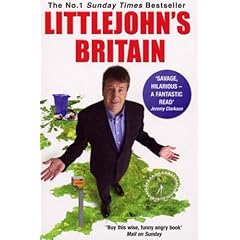
The Christmas book is a terrible thing. Witless, pointless ghosted autobiographies by assorted cretins and non-entities, the endless variety of toilet books with men on their covers standing with their arms stretched out in front of them, gormless expressions on their faces, bemoaning in mime the state of the nation, the books of lists, the books of lists of lists, and the annuals, put together with all the loving care of the work experience kid who desperately wants to return to school rather than be shown another co-workers' balls.

Praise Jah then that Quentin Letts, the Mail's piss-poor sketch writer, has put together a Christmas book entitled "50 people who buggered up Britain", which the paper is naturally serialising. The key to the desperation is there in the title: to really stand a chance in the Christmas market you have to stick a swear-word in there, i.e. Crap Towns and its sequels; Is it Just Me or is Everything Shit? and its sequels. To someone who is inclined to agree that quite a lot of things are shit, even if for the diametric opposite reason to those stated, you still wouldn't be seen dead reading such, well, shit.

It does though fall directly in line with the Mail's own thinking. For those who think that the paper has since the 50s been convinced we've been going to hell in a handcart, it's instructive to note that both George Orwell and even Evelyn Waugh noted the same tendencies in the paper when they were writing. There is no golden age in the Mail's eyes, not only because there never has been one, but because everything is always going to get worse and keep on getting worse. Convince your readers of this and you're half-way there. Perhaps the best summation of the Mail's world view is by comparing it with the Grauniad. Not its politics, but the fact that the Guardian every day runs a leader with the title "In praise of..." If the Mail was to adopt a similar strategy, its leader would instead be titled "In complete denunciation of..."

For those thinking that Letts' list would be a sub-Clarkson pseudo-Littlejohn style rant of how ZaNuLieBore has brought Britain to its knees, first and foremost due to Gordon Clown selling off our gold reserves, then you'll be happy to know that he's slightly more subtle than that. Today's list only has the first 20 offenders, but there's no sight yet of any of the Blairs, or any New Labour politician other than John Prescott, for whom Letts adopts the same outraged tone of snobbery which he brought to his assaults on "Gorbals Mick" earlier in the year (The Amazon page has the full listing, and in fact all the New Labour hierarchy are there). In fact, some of his choices are more than sound: few will disagree that Jeffrey Archer is a prick, perhaps only now are we realising just how wrong Beeching was, and I would happily renounce my social libertarian leanings if I could wipe Starbucks off the face of the map.

Then, with Letts' fourth-choice, everything goes to pot. James Callaghan is picked because of decimalisation. Letts isn't perhaps being entirely serious, but his second paragraph is revealing:

For centuries our kingdom had maintained a quirky duo-decimal system of currency which sharpened our mental arithmetic, burnished our national identity and baffled foreigners.

It was also completely and utterly illogical. If decimalisation was dumbing down, then bring on the apocaylpse.

Next up is Princess Diana. Blaming Diana for anything is a bit like blaming the knife for a stabbing rather than the individual themselves, for the simple reason that Diana can now be taken to signify anything and everything. She stood for almost nothing herself, except for the charities she supported. Everything else was and has been a media construct; used since her very emergence to sell newspapers, something still going on today. Diana didn't, in Letts' words, make us more neurotic: if anyone did, it was the press that continuously urged us to "keep grieving", that banned paparazzi shots only to reinstate them within days, and that castigated anyone who dared to suggest that the events over 10 years ago were a hideous overreaction that was fed and kept going by hysterical media which had an interest in ensuring it went on for as long as possible. In any case, if Diana did contribute, however slightly, to us losing our notorious stiff upper-lip, what is so bad about that? If anything, the lack of empathy which is still so prevalent is much more harmful, as epitomised by the mob that egged a teenager on who was threatening to jump from a high building in Derby. Jump he did, and they then took photographs off his broken body; the tabloids were shocked, but why should they have been when they take part in the ritual humiliation which takes place on "reality" shows? They bemoan the fake tears but not also the inherent nastiness of rich individuals smirking and snarling at those foolish enough to imagine they might have a talent.

Sixth then is Greg Dyke, for the heinous crime of moving the 9 O'Clock News to 10 O'Clock (seriously) and seventh is Charles Saatchi for having the wrong taste in art. More interesting is Graham Kelly at 8th, the Football Association director who created the Premier League and signed away the TV rights. Surely though you have to be equitable here; you can't attack one side of the deal and not the other half, which was Sky, or as he's also known, Rupert Murdoch. Without Murdoch's money Kelly would have had no Premiership. Murdoch might yet be included, but considering the potential for crossfire between the Murdoch press and Associated Newspapers, I'm not holding my breath (he's on Letts' list, so it should be interesting to see how they cover it).

It's not worth wasting breath, or rather my fingers on Letts's attack on Crosland for daring to introduce comprehensives at 9th, and equally weak is blaming John McEnroe for the current lack of respect because of his hissy fits while playing tennis over 20 years ago. No real disagreement with the inclusion of Stephen Marks, CEO of FC:UK, but considering that err, this very book has what used to be considered one of the more offensive swear-words in its title, Letts seems to be having his cake and eating it to say the least.

We're at 13, and Letts already seems to be running out of ideas. Frank Blackmore, inventor of the mini-roundabout, is the next to be denounced. While mini-roundabouts can be abused, more often than not they make busy junctions both far safer and handle the traffic more fairly and efficiently. Equally daft is the choosing of Sir Jimmy Saville at 14th for being what is generally known as an individual. Sure, if you're unlucky enough to be one of his children you might not think the same way but the phrase national treasure was invented for the likes of Sir Jimmy.

Far more contemptible is Edward Heath at 15. Eurosceptics will doubtless decry him because of his passion for Europe, but few would pick on him because of his swift defenestration of Enoch Powell. According to Letts, this made it impossible to criticise immigration for 40 years. To quote David Cameron from last week, what country exactly does Letts live in? Powell was wrong, has always been wrong, and Heath was absolutely right, however much the likes of Letts would like to think otherwise.

Skipping over Janet Street-Porter, 17th may be a surprise to some: Margaret Thatcher. Even Letts is forced to admit that if anyone has broken Britain, it was Thatcher that shattered it, with her assaults not just on the National Union of Mineworkers but the miners personally. It's why we ought to be so terrified of Cameron's claims that he will be as radical on social policy as Thatcher was economically, even as Thatcher's last remaining economic legacies fall apart.

The last three for today are pretty mediocre, in more ways than one: Alan Titchmarsh, Topsy and Tim (who?) and Tim Westwood, whom I somehow imagine Quentin Letts has never actually listened to, but who's a handy person to bash the BBC with. He's apparently an emblem of "cultural defeatism and broadcasting decadence". Not to question the fact that the man's a twat; he is. It just doesn't like so much else of this list, ring true.

You can understand why the Mail rushed to serialise it, splashing it on the front page, because it shares so many of its own values. Ridiculously conservative and resistant to change, even when it defies all logic, as on decimalisation and Greg Dyke; dismissive of any showing of genuine emotion that isn't covered by anger, except if it's by someone or for some reason which the paper itself can use to sell more papers; endlessly hypocritical, as on FC:UK; stereotypically Little Englander, as on Ted Heath; and attacking that which it doesn't understand or even want to understand with Tim Westwood. The only credit you can give to either is that they don't take glory in everything Margaret Thatcher ever did. Don't know about you, but I can't wait for the other 30.

Labels: , , , , , , ,

AddThis Social Bookmark Button

Wednesday, October 01, 2008 

Our new overlords part two.

As I wrote on Monday, increasingly the Conservatives look to be returning to their status as the natural party of government, as they have so often been arrogantly described. This perception is only likely to be exacerbated (and yes, I do mean exacerbated) by Cameron's speech today.

There was no doubt that this was pitched almost squarely, not at the country, but at the Conservative core vote, or those who used to be the Conservative core vote. It has to be remembered that the Conservatives won the popular vote in England in 2005: one last heave, especially against an increasingly unpopular Labour government, would probably win them the next election in any event, even if leaving them without an absolute majority. With crises of any nature often inspiring a small rallying round the current leader, the Conservatives seem to have decided after the events of this week not to push any further into Labour territory, the jibe about "novices" being by no means thrown back at all at Brown by Cameron's performance.

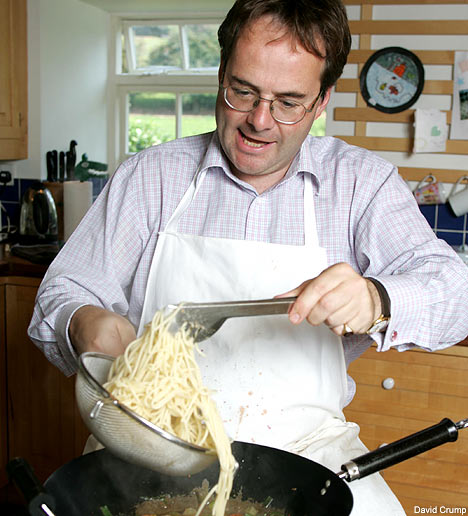
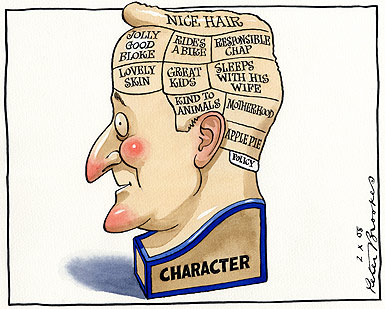
Instead, Cameron seemed to want throw insults at almost everyone and everything other than Brown: read through it, and it all seems so sickeningly familiar; the unemployed, teachers, the NHS workers, although not directly addressed but implicated by the letter which has already been called into question, health and safety, human rights, all were tongue lashed at some point or another. Libertarians too, were maligned at one point, for thinking that "we all have the right to do whatever we want, regardless of the effect on others", which is the exact opposite of what most libertarians stand for. The only thing that didn't come in for a leathering was strangely the European Union. Cameron by way of levelling this out praised the armed forces in Afghanistan (he didn't mention Iraq) who are "are defending our freedom and our way of life as surely and as bravely as any soldiers in our nation's history", the Gurkhas, the family, responsibility, sound money, low taxes, enterprise, Helen Newlove, leadership, character and judgement. The only things he didn't mention, as wags have already identified, is motherhood and apple pie.

This wasn't an awful speech, far from it. It was instead as close to a vision of how Britain would look under Cameron as we have had so far, which is all the more depressing for how you can already imagine it. I've argued consistently that the new Conservatives are in essence the ultra-Blairites, who will do everything that they always dreamed they could of done, but that either the opposition of Gordon Brown or the parliamentary Labour party stopped them from doing. Remember Tony Blair and how he wished with reform that he'd gone further, that he'd further rubbed his own party's nose in it for the sake of it, told them there was no alternative and then wondered why by the end not just his own party but the entire country was sick of him and his pseudo-Thatcherism and you had David Cameron today, except with a party that absolutely lapped it up, because they believed every word of it.

Yes, there certainly have been changes in the Conservative party; there have had to be, such has been the impact of New Labour on Britain. There has been almost certainly a general shift towards the centre ground, which has meant that Cameron has had to embrace the environment, although that was hardly mentioned here, and that he toned down his section on the specious "broken society" by inserting a passage about Wandsworth prison and those that are there because they can't read or write or because they're addicted to drugs, although it's worth noting that Cameron's supposed guru Helen Newlove, who only believes society is broken because she was unfortunate enough to be married to someone who was brutally and meaninglessly killed, which might have broken her world but did not everyone else's, thinks excuses should stop being made for such people, but his world view is summed up a soundbite he's used before: he wants to transform society in the same way that Thatcher transformed the economy. Rather than blaming New Labour for all the woes of the economy, which he did to a larger extent than George Osborne did on Monday, he might want to wonder who exactly it was who started the bonfire of regulation that has led directly to the ructions of the past year, of the person who originally decimated the communities which he now wants to fix, who led us to depend on the City instead of our industry for our economic growth, for while New Labour encouraged all of these things, it's his idol that began them, and had the Conservatives been in power, would have encouraged and rallied them on just as much if not to an even greater extent.

Brown's speech last week was infinitely better than this: not because there was any more substance in it, but because it was believeable, it was honest, and because it flowed. He doesn't, like Cameron, think that it's about character rather than policies, and thank goodness for that. The difference was just one thing: confidence. Cameron overwhelmingly has it, as does his party, while Labour is left looking utterly bereft. It's their fault that they are in this mess, not just for leaving Blair in power for too long, but because they also believed there was no alternative, that the good times would keep rolling, and that the City rather than anything or anyone else had all the answers. We are now left with the real Conservative party to pick up the pieces, or rather, further dash them, and they simply have no one to blame but themselves.

Labels: , , , , , ,

AddThis Social Bookmark Button

Friday, July 18, 2008 

Crime stat porn and thoughts connected.

Try as they did, opposition politicians yesterday were fighting a losing battle in trying to get some sort of advantage out of the latest crime figures. With the apparent rise in knife crime and teenagers killing each other in record numbers in London, it ought to have been a reasonably easy task. The figures though told a completely different story, and one which is also increasingly difficult to dismiss: after stabilising over the last couple of years, the large falls once again accelerated in 2007/08. Crime as recorded by the British Crime Survey (PDF, references are made throughout the post to the relevant pages), more authoritative because of its huge over 40,000 survey sample showed it to have fallen by 10%, while police recorded crime fell by 9%. In fact, the only figures to show a rise were homicide, which rose by 2% from 759 to 784, drug offences, which were up 18%, mainly because of the continued, possibly soon to end confiscating and warn policy on cannabis and gun offences, which also rose by 2%. Everything else, as recorded by both the police and BCS, either remained stable or fell.

Dominic Grieve, David Davis's replacement as Tory shadow home secretary tried to claim that violent crime had risen by "80%" under Labour, but this ignores the fact that violent crime as measured by the BCS has fallen by an astonishing almost half since 1995, 48% down. Because of the way the police recorded crime changed in 2002/03 figures are now not comparable prior to then, but while the police recorded a 25% rise in violence against the person between then and 2005/06, this has since fallen by 9% to 0.96 million offences (page 21). Where Grieve got his 80% figure from is a mystery.

It was instead left to the tabloids to shriek about the figures which previously they hadn't much cared about. They mostly played down the collected for the first time figures by the police in which knives were used in a crime (attempted murder; wounding with intent to do grievous bodily harm (GBH); wounding or inflicting grievous bodily harm (i.e. without intent); robbery of business property; and robbery of personal property) which totalled 22,151 attacks or offences in total (page 75), which showed that more than 55% of police recorded crimes involving a knife took place in either London, Birmingham or Manchester, while in large areas of the country there were by comparison a tiny number, such as in Cumbria where there were 73, North Yorkshire in which there were 66, Norfolk 67 and Dorset 47 (the Guardian has a handy interactive map), to instead look at the BCS figures on violent crime involving a bladed instrument.

The BCS in total recorded 2,164,000 violent incidents against adults in England and Wales in 2007/08 (page 62). Of these, 6% involved a knife (page 63). Extrapolating from this, this is where the headlines and leading paragraphs of around 130,000 offences involving a knife came from. Further distorting and potentially worrying people, this was then broken down to 350 a day or to a "knife attack" every four minutes. It doesn't matter that these figures are essentially meaningless when you can't get a full rounded figure in the first place from 6% of 2,164,000, they nonetheless occupied the front pages and screamed about the reality of life in "Blade Britain". What few of the papers bothered to go into was the caveats that are involved in these figures which help greatly in understanding that these are simply not instances of people getting stabbed or even attacked. For example, just over 51% of all violent incidents resulted in no injury whatsoever (page 72), while the most common injuries that were suffered were minor bruising or a black eye (28%), severe bruising (15%) and cuts (13%) (page 73). In only 12% of violent incidents was any form of medical attention sought, with 9% seeing a doctor and just 1% requiring an overnight stay in hospital. Of the 2,164,000 violent incidents, around a third were incidents of stranger violence (page 71), while another third was, more surprisingly, acquaintance violence. Domestic violence accounted for one in six violent incidents. The overall risk of being a victim of violent crime was 3.2% (page 70). The overall risk of being a victim of any sort of crime was 22%, the lowest since the BCS began in 1981.

It wasn't even as if the tabloids could claim there had been any huge rise in knife crime, as the statistics in fact mainly show the opposite. The use of knives in the 2,164,000 violent incidents was actually down 1% to 6% from the 2006/07 survey, although the figure was not stastically significant (page 76). The figure involving knives used in violent incidents has also stayed broadly stable since 1995, hovering around or below 8%. Also interestingly, the Metropolitan police, which have been collecting figures with crimes involving knives separately from other forces also recorded a fall. The Met recorded 10,220 knife enabled crimes in 07/08 (page 76), 16% down on last year, figures which were 4% down on the previous year. As korova on Mask of Anarchy points out, mostly ignored but also in the figures is the fact that 7% of violent incidents involved a blunt or "hitting" instrument, which can do potentially as much if not more damage than a knife, but which have been lost sight of in the current atmosphere. We are not then suffering from a knife crime epidemic. The reality according to the figures is that we're experiencing a stabilising effect and no real rise in knife crime. What is happening without question is that young people, especially in the cities are carrying knives, and are increasingly prepared to use them, as the latest terrible death of a teenager shows. That's the main reason why we're currently having such potentially adverse and over the top media attention, along with the fact that alongside the mostly black victims, three of those who have died have been white, middle class, and either had telegenic, hospitable and eloquent parents or semi-famous relatives.

The problem is, as we all know, that fewer and fewer people believe the statistics. Two-thirds believed that crime had risen over the past year, but as often seems to be the case, only 39% believed that crime had risen in their area. The same pattern seems to apply to those who think that the NHS is nationally getting worse even while they think that their local services are actually fairly good. It's hard not to link this directly with media coverage: faced with the number of young deaths in London, who wouldn't after all believe that crime is rising? With all those front pages this morning, again, who wouldn't believe it also, even if they read the articles in detail, where most do make clear that according to the statistics, if they care to believe them, that crime has fallen apparently spectacularly? This is where Louise Casey's recommendation for a independent statistics board might help, but only if it potentially has teeth which can challenge the media picture.

Also related but also without an answer is exactly why crime is falling so significantly, again, if we are to believe the statistics. This incidentally isn't just happening here but across the Western world, so unless everyone's on the fiddle it's an almost global picture. The Guardian's editorial suggests the reason is that we've all gotten richer but that we've also gotten older, and crime, as the BCS itself shows, is predominantly a young man's game. Criminologists themselves admit that don't know, which in itself is refreshing; others point towards better security. The government's policies also have to be considered; perhaps the record numbers in prison have contributed to the fall in crime? If so, that itself puts those of us on the left who think there are already too many people in prison, let alone without adding more capacity, especially when those inside cannot get adequate treatment for the drug problems and mental health issues which so contribute to crime, in a difficult position.

In summary, there is no knife crime epidemic, or at least one isn't reflected in the statistics. Crime itself is at its lowest point for a generation, and again, although it doesn't feel like, Britain is now probably the safest it's been overall since the early 1980s. The real difficulty is in convincing the public themselves that this is the case, and not exaggerating the real problems we do have into a picture of a broken society. The biggest difficulty of all is that we don't seem to have any answers whatsoever.

Related posts:
Richard Garside - Knife crime: perception vs reality
Little Richardjohn - I live in Peckham. I feel safe.
Cassilis - You can't just ignore the inconveinent numbers

Labels: , , , , , , , , ,

AddThis Social Bookmark Button

Wednesday, July 16, 2008 

Cameron, the broken society and the wider left.

Reading the Grauniad's interview with David Cameron and the accompanying article, it's very difficult not to become depressed that after 10 years of Blair, within a couple of years we're going to be under the thumb of his very real heir, and with not just the Labour party but the entirety of the left raising barely a whimper of defiance.

Cameron's broken society gambit is almost certainly the one detail that makes me despair the most. He knows it's not true, we know it isn't true, the government knows it isn't true, even the Times, whose sister paper has done the most to perpetuate the notion knows it isn't true, and yet I don't think I can recall a single politician, whether they be Labour or Liberal Democrat who has directly challenged Cameron to provide some real evidence that British society is any sense broken. Here's Cameron's incredibly weak case for it:

He denies he is giving a false picture of Britain by talking of a broken society, saying: "There is a general incivility that people have to put up with, people shouting at you on the bus or abusing you on the street, or road rage. There is a lot of casual violence; and I think it is important to draw attention to it."

It doesn't seem to matter that I somehow doubt Cameron himself has been on a bus in years, if ever, but this isn't a picture of a broken society. It may be a picture of an uncivil, rude, selfish society, but what it is not is a broken society. This is anecdotal evidence writ large: I reasonably regularly travel on buses and I've never seen people shouting at each other, let alone shout at me; more likely is that everyone will be ignoring each other or desperately hoping that the few noisy ones that are stop talking so loudly about their sex lives. I've seen bus drivers themselves try to cause trouble by picking people up when they don't say please and thank you (incidentally the one who did this only picked up those that also happened to be black) but again, not random shouting and slanging matches. I have been on occasion abused on the street, but that's the sort of thing you have to put up with when you're four-eyed and an ugly bastard; as on the previous post, some people either to need to grow a backbone or get over themselves. Road rage, as someone recently pointed out, didn't exist as a term back in the late 80s, and what's also developed since the late 80s is the congestion and delays which so often prompt it. Then there's the casual violence that according the BCS has dropped by 40% since 1995.

Cameron, rather than being compared to Blair, likes to be compared to Obama. The difference is that if either Obama or McCain tried to claim that America is a broken society, a claim that probably has more merit than the notion that ours is, considering the crushing inequality, far higher crime rate and pitiful minimum wage, not to mention an even more pervasive notion of individualism, then they would be absolutely crucified for not being patriotic about their own country. Thankfully we're not anything like that here, but what we are instead is intensely cynical, incredibly self-critical and with a tendency for self-loathing. Those are all qualities that I myself have in abundance, so I'm not pointing the finger. They do however lead us to exaggerating and making out that things are far worse than they actually are. Cameron's broken society rhetoric can be directly linked back to Blair's own "tough on crime" soundbite, even if it was created by Gordon Brown. That itself was connected with the James Bulger murder, which despite being a horrific one-off was enough to set us back on the "prison works" road which hasn't altered for over a decade. Cameron is now working off the back of the rise of knife crime to claim that society is broken. It's just as dubious then as the notion that prison works was, but because it's so current and can't be argued against because of the immediacy of such terrible crimes, it's difficult to argue against.

Labour's response to all this is to claim that David Cameron is a PR merchant who doesn't have any policies. For a time this could wash: he is the former while he didn't have the latter. That simply isn't true any more. He remains the PR merchant with a spin doctor in Andy Coulson behind him to rival Alastair Campbell, but the Tory party does now have policies. Not brilliant ones, but they're enough, just as Labour was suitably vague prior to 97. What's more, they instantly appeal even if they fall apart after a moment's study: their fuel escalator idea is a fantastic concept, easy to understand but which is completely out of step with their so-called green credentials; locking up yobs with knives is populist and difficult to argue against while being a terrible idea; and his broken Britain stuff is brazen and defining but empty.

What's more is that he's combining it with the ruthless streak that such politicians who crave power have. He's also already compromising, hence letting it be known that the Tories may have to raise taxes before they can cut them because of the huge borrowing debt and the black hole in the public finances, whilst looming over Boris in the Mayor's office like Blair would have liked to have done over Ken. He already has the sort of public image which Blair gained, and which Brown would kill for, with decent popularity ratings, and his performance over the last year has won over the doubters in the Conservative party itself.

As far as I can see it, the left has two choices. Either the Labour party picks itself up out of its desperate misery, viciously goes on the offensive against Cameron and completely challenges them over every little detail, over whether we have a broken society, over public spending pledges, over what their foreign policy would be, and the left joins in with it, even if deservedly detached, or the left has to disconnect completely from Labour now. You see it on Comment is Free and elsewhere, how the left, despite its complete disengagement and resentment in places with Labour is getting all the blame for what's gone wrong and none of the credit for what's gone right. The real danger is that the left and its causes get dragged down with Labour, and out of not just power but out of any influence for another generation.

This is why it makes me so despondent when rather than challenging the Conservatives and potentially forcing them to improve their plans, the left seems more concerned with such petty, ridiculous and banal matters as whether or not we should use the word "chav". Yes, a tiny minority of individuals are stupid, wear awful clothes, listen to terrible music and act like imbeciles; if some people want to call them chavs let them get on with it. There are more important things to be concerned with. If the last 10 years have taught us anything it's that someone with charisma is an incredibly dangerous thing. Unhinged by even the slightest disagreement amongst backbench supporters, Cameron has the potential to be far more destructive than Blair ever was. We're almost certainly going to have at least five years of Tory rule, so let's at least ensure that there's some sort of opposition, shall we? Or we can go and shoot ourselves now. There, comrades, are the options.

Labels: , , , , , , , , ,

AddThis Social Bookmark Button

About

  • This is septicisle
profile

Links

Archives