Thursday, October 02, 2008 

Blair today, gone tomorrow.

Almost perversely, I take no pleasure whatsoever in the resignation of Ian Blair. Perhaps because it has come so suddenly and without warning, when if he had had any dignity it would have been when it was revealed that he hadn't known that an innocent man had been shot dead by his officers until morning after it had happened, when even his secretary had apparently known.

That stubborn obstinacy to admit to his failings however was something that completely dominated his tenure as the Metropolitan police's chief commissioner. While the execution of a Brazilian man on a tube train the day after an attempted round of suicide attacks was ultimately what brought him down, with its slow but inexorable casting of a shadow over him, this was a policeman who thought that he was a politician first and a cop second. He never ceased to inform the country of just how dark the sky was due to the potential threat of exploding brown people, even while his officers proved themselves almost as adept at causing fear as the terrorists' attempts were amateurish. He campaigned for up to 90 days detention without charge, thought that identity cards were a brilliant idea, and generally put himself about as much as he possibly could.

While you cannot directly blame Blair personally for the smear campaigns against Jean Charles de Menezes and secondly the Kalam family, he was ultimately responsible for the actions of his officers. What he can be directly linked to was the decision to plead not guilty to the charges brought under the health and safety act, especially when so many other senior officers pleaded with him to take the hit and get over it. Again, even this wouldn't have been so bad if he had instructed his lawyers not to be aggresive and instead defend the Met purely from the operational point of view, that it had been a dreadful mistake in an incredibly hectic and uncertain time, but they didn't; they went straight for the jugular. Jean Charles de Menezes was according to Ronald Thwaites QC more or less asking for it: despite never being challenged by the police, Thwaites claimed that he had failed to comply with them; that he looked like the suspect, when his skin tone was completely different; that he was aggressive and threatening when he acted just like every other commuter that morning, as the CCTV showed; and that he might have acted in such a way because he may have thought he had cocaine in his pocket, even though he hadn't.

No one with absolutely any feeling for the de Menezes family would have argued such a case, but Ian Blair somehow imagined it was appropriate. Just like other things he thought were appropriate, such as recording a call he made to the attorney general without permission, as well as ones to the Independent Police Complaints Commission. The IPCC in fact undoubtedly delivered the most telling criticism of him: that if he hadn't, as soon as he knew a man had been shot dead by police on 22/07/05, wrote to the prime minister asking that the IPCC be stopped from launching their investigation into the death of someone at the hands of the police, as they are legally required to do, then many of the things that subsequently happened that resulted in the prosecution against the Met may not have occurred. There was never any evidence that Blair was trying to cover anything up, as after all, he was completely out of the loop. It was just a typically ignorant, short-sighted move, delaying something that would have had to be done at some point as a matter of course. That delay effectively left him a dead man walking.

I take no pleasure, not even schadenfreude, not just because it sets a precedent where the London Mayor can effectively veto the choice of the home secretary, not to mention the MPA, further politicising the role, but because as bad as Blair was in so many ways, there's hardly a whole bundle of talent waiting to take over from him. And as much as he was potentially corrupt, constantly scaremongering, interfering in political discussions and out of his depth, he also was probably the most liberal, at least on general policing and on encouraging ethnic minorities to join the force, commanding officer the Met has ever had and is now likely to have for quite some time. Despite his apparent personality clashes with both Ali Dizaei and Tarique Ghuffar, he started the move towards a more representative Met, and no one I think can begin to suggest that was anything but a good thing. When you consider that the other most senior police officers, or at least publicly recognisable ones of late have been Lord Stevens, Andy Hayman and Peter Clarke, all of them as either convinced of the sky falling as Blair was or in the case of Hayman, just as guilty as Blair over de Menezes whilst also accused of siphoning off money, then it doesn't exactly fill you with hope that the replacement will be any better. Celebrate the demise of Blair if we must, but perhaps as with what we got after the other Blair, we might come to rue what we wished for.

Labels: , , , , ,

AddThis Social Bookmark Button

Tuesday, December 04, 2007 

One down, one to go.

Good riddance then to Andy Hayman, the man who in the Sun's words "is feared by the terrorist scum determined to destroy our way of life." I'm sure that those willing to "martyr" themselves were terrified of him, while anyone unfortunate enough to get in the way of the anti-terrorist operations he was responsible for had plenty of reasons to be frightened, as the death of Jean Charles de Menezes and the Forest Gate fiasco more than demonstrated.

Like Ian Blair, Hayman should have resigned after the second IPCC report into the Met's operation on the 22nd of July found that he had failed to inform Blair that an innocent man had been shot dead. According to multiple accounts, Hayman informed the Crime Reporters Association that an innocent man had been shot dead at around 4pm. When questioned about what he told the CRA by the IPCC, he said he couldn't remember what he had. At 5pm he attended a sub-meeting of the Met's management board, where he said the following:

AC HAYMAN: There is press running that the person shot is not one of the four bombers. We need to present this that he is believed to be. This is different to confirming that he is. On the balance of probabilities, it isn’t. To have this for offer would be low risk.

Having started the press running that the man shot was not one of the four bombers, he then commenced the squall of lies and smears which wouldn't be fully corrected until the IPCC's preliminary investigatory findings were leaked.

Rather than going with something approaching dignity, Hayman has now "retired" after allegations were made that he had ran up credit card expenses of £15,000 and that he took a female officer on foreign trips with him, which he has described as "unfounded accusations". Accurate or not, it's difficult not to see them as poetic justice.

Labels: , , ,

AddThis Social Bookmark Button

Thursday, November 22, 2007 

A complete failure to find anyone accountable.

Ian Blair then seems set to continue as the head of the Metropolitan police, at least for another two and half years, upon which his current contract expires. It's anyone's guess as to whether it would then be renewed.

I don't think it can be overstated that, as it stands, absolutely no one has personally been found culpable for the systemic failures that culminated in an innocent man losing his life on that morning, in the most dreadful, vicious and reprehensible of circumstances. This isn't about being vindicative or demanding a scalp just for the sake of it; someone, in this case Sir Ian Blair, is ultimately responsible for what went wrong on the 22nd of July 2005, and then subsequently the behaviour of the Met as a whole right up to today.

If, instead of reacting in the way that the Met did, they had come out within a matter of hours of de Menezes being shot, come clean and said there's been a terrible tragedy, we're incredibly sorry, and we'll immediately let the Independent Police Complaints Commission investigate what went wrong and learn from its recommendations, all of the unpleasantness of the last two years could have been avoided. Instead, within an hour of de Menezes being shot dead, Ian Blair himself had written to the prime minister urging him to stop the IPCC from being allowed to investigate because of the "unique circumstances" of the time. As the first IPCC report stated, if Blair himself hadn't tried to halt their investigation, all of this could have been sorted out far sooner.

What followed from there was blatant lies, obfuscation and smears. The police, despite knowing full well that de Menezes had not been wearing a bulky jacket and that he hadn't leapt the barrier, allowed those details to become stated fact without putting the record straight. It's hard not to come to the conclusion that this was deliberate when you consider what followed: the leaking that he had overstayed his visa, as if this made a jot of difference to the fact that they had shot dead an innocent man, then later that a woman had accused him of rape, which when he was cleared of involvement in was hardly reported. If the IPCC investigation hadn't been leaked, there's the possibility we wouldn't have learned the truth of what happened for months more. The leaker responsible had her door broken down at dawn for her trouble.

Then, in the biggest and most outrageous insult of all, de Menezes was further smeared at the health and safety prosecution trial. A photograph comparing Menezes with Hussein Osman was according to a prosecution witness manipulated to make the obvious differences between the two less distinct, while Ronald Thwaites QC, in his closing argument wove a tale which directly contradicted evidence that the jury had heard, claiming that de Menezes didn't comply with officers who challenged him when he never was challenged, that he had behaved suspiciously when he had in fact acted like any other commuter would have done, and that Menezes might have "thought" he had drugs in his pocket which could have accounted for the way he acted, even though he didn't have any and didn't act out of the ordinary.

Sir Ian Blair could have pleaded guilty to the charge, especially when the prosecution case was so compelling. Instead, as the force today openly puts on its website, it's asked lawyers to consider whether it was in the public interest to contest the charge, and then whether an appeal is possible. Rather than learning from its mistakes, under Blair the force is still intent on challenging the actual facts of what happened on that morning. The document (PDF) itself only demonstrates the arrogance with which the lawyers responsible for the Met's woeful defence view their arguments, and shows their contempt for both the jury and the judge. Choice parts are:

9. Although the jury’s verdict is impenetrable as to precisely what they accepted and what they rejected of our defence, the judge made it plain at the conclusion of his summing-up that it was sufficient for the jury to make a finding against us on only one of the nineteen allegations in order to convict. It therefore does not follow from the fact of conviction that the jury accepted all of the prosecution’s allegations, or that we were found guilty of even one “catastrophic” failing as the prosecution labelled our shortcomings: a description which the judge did not adopt in his sentencing remarks.

This is what is called being in denial.

11. We knew and acknowledged that this was always going to be a difficult case in which to secure an acquittal. There was always a significant danger, as we think in fact came to pass, that the central issues would be obscured by too close a focus on the tragic outcome (which was not of itself a necessary element of the prosecution’s case), and that the jury would be unable to divest itself of hindsight and emotion fuelled in part by uninformed and adverse reporting before and during the trial.

How they came to such conclusions as these is anyone's guess. Rather than them not being able to rebut the case, built around the IPCC's report, it's all down to the jury's hindsight and "emotion". The part about the "uniformed and adverse reporting" is classic: the Met did everything it could to spin the coverage their way, lying, smearing and not correcting those "uninformed" reports, yet the guilty verdict is partly a result of the "adverse" reporting.

14. In summary, we feel that it was appropriate, right and reasonable for the MPS to mount a full contest to the charge and allegations which it faced. The MPS was accordingly entitled to seek the verdict of a jury.

See, this isn't just about whether there's a case for appeal, it's also about the lawyers, no doubt handsomely remunerated for their tactics in smearing de Menezes, justifying themselves.

Next, it's all the judge's fault:

18. The trial judge brought his influence to bear on the jury throughout the trial by the manner and frequency of his interventions and most conspicuously in his summing-up. We have little doubt that he conveyed to the jury his own unshakeable assessment that we could and should have done a better job. This should not have occurred. It was a matter about which strong complaint was made to the judge in open court. We are not, however, at all optimistic that an appeal on this ground would succeed.

If anyone should be complained about, it's Ronald Thwaites, but then he's one of the authors of this document, and unsurprisingly he doesn't criticise his own role in the Met's failure to get an acquittal.

All of this is without mentioning that Blair himself didn't know that an innocent man had been shot dead until the following morning, when even his secretary had heard the rumours. Those supporting Ian Blair know in their heart of hearts that the Met's behaviour both on that day and since then has been indefensible: that's why they're left with such intellectually bankrupt tactics as saying that "Al-Qaeda must be laughing at us while we busy ourselves pillorying the police who keep us safe," when the reality was that the police did the bombers' work for them, and then going off on tangents about how it's really about Ian Blair's success(!) that those who want him to go care about.

The failure for anyone to be found accountable though shouldn't be surprising. The police have killed innocent men before and got away with it. They will almost certainly kill more innocent people and get away with it too. Sir Ian Blair should have been sacked, seeing as he's too obstinate and too pig-headed to do the decent thing, to show that the police themselves are not above the laws that every other single one of us are held to. He has survived, but the Met itself has been tarnished.

Labels: , , ,

AddThis Social Bookmark Button

Thursday, November 08, 2007 

de Menezes: Blair as mendacious and deluded as his namesake.


Finally then, a year and ten months it was first formally finished,
we receive the IPCC investigation into the death of Jean Charles de Menezes (PDF).

What once would have been explosive and damning reading has been rendered, both by the leaks and the trial of the Met under health and safety legislation, into something almost familiar. It documents failures at all levels, from the officers conducting the surveillance on the morning all the way up to "Sir" Ian Blair himself.

The one thing that overwhelming sticks out from quickly speed-reading the entire document is that of the differing accounts between both the public witnesses of what happened on the tube train and that of the CO12 Special Branch officers and SO19 firearms officers, the first (section 13) who state the police made no mention of who they were when they entered the train, except from the CO12 officers stating "he's here", and the latter (section 18) who all claim that they shouted "police" or "armed police".

Similarly, Cressida Dick and the others inside "Room 1600" all maintain that de Menezes had been identified as Osman on a number of occasions, up to 5 in all. The CO12 officers (section 12) deny ever making a positive identification; indeed, the chronicle of events suggest that one officer decided it definitely wasn't Osman, while the others were uncertain, and thought that the surveillance should continue as a result. Although one managed to come to the conclusion that de Menezes had distinct "Mongolian eyes", there was never a definite positive given to Room 1600. Again, despite none of the surveillance team mentioning that the suspect was "jumpy" or "nervous", Room 1600 came to believe that de Menezes was agitated and "definitely their man." Dick and Detective Superintendent Boutcher requested that the surveillance team give a number on the scale of 1 to 10 on how sure they were that de Menezes was Osman (section 12.22), a request that the receiver, 'James', said was ridiculous, but said that when he had previously seen him over 15 minutes earlier he thought it was a "good possible". This was taken as "they believe it to be Osman."

Despite all the talk after the death of de Menezes of the police's use of "Operation Kratos", the shoot-to-kill policy on those suspected of being suicide bombers, it was never actually put into effect on the morning of the death. The report does go further into the background of Kratos (section 9) and how it came to be police policy, with there being little to no government input. The only real advice the police sought was that of the Treasury Counsel as to the legality of shooting to kill, which came to the conclusion that it was. One of the IPCC recommendations is that there should have been a public debate prior to the implementation of the policy, but that it wasn't thought necessary, or even worthy of discussion in parliament is an indictment of the secretive way of which the police continue to operate.

Even though Kratos was not in actual operation, de Menezes' fate may well have been sealed by the briefing delivered to the firearms officers at Nightingale Lane police station, which dropped everything but the actual shoot-to-kill policy itself into the mix. The individuals involved in the bombings were described as being "deadly and determined" and "up for it" (section 11.11); never was it mentioned that they might encounter those who were entirely innocent in the course of the day. The two officers who shot de Menezes, referred to as "Charlie 2" and "Charlie 12" in the report both said how they believed it was very likely that they would be asked to "intercept deadly and determined terrorist suicide bombers," in the words of Charlie 2 (section 18.21). Charlie 12 was more verbose (section 18.31):

‘We were possibly about to face subjects who had training and had attempted to commit atrocities on innocent human beings with complete disregard to their own lives. They had prepared devices in order to achieve this. There was a real tangible danger that if we didn’t act quickly and correctly there would be an extreme loss of life”.

Both felt as they entered the tube that de Menezes was about to detonate his explosives and they had no choice but to use deadly force, even though it had not been authorised by any officer. The report asked the Crown Prosecution Service to consider whether the actions of of Charlie 2 and 12 amounted to murder, given their justification for shooting de Menezes. (section 20.74). They decided against. Cressida Dick's abject failure to properly either know what was being sent to Room 1600 from the CO12 team, or to make clear to the SO19 team that she wanted de Menezes arrested and not shot, something she failed to make significantly clear, was of no help. One witness from within Room 1600, as had been leaked, claims that Dick added "at all costs." (section 12.36) Whether, if true, it would have made any difference we'll never know.

The report does possibly help clear up some of the initial eyewitness reports given to the media which were so horribly wrong. Many of the witnesses mistook "Ivor", the officer first on the scene and who grabbed hold of de Menezes for an Asian man, and with him also being thrown and a gun pointed at him, he could have easily been mistaken for the man who was shot.

There are a few more minor points in the report that are interesting or indicative of what already was happening on the scene in the aftermath; the pathologist who was on the scene by 13:33 on the 22nd of July was apparently briefed that de Menezes had vaulted the ticket barrier (section 14.16) and ran down the stairs before being shot after tripping, and included those "facts" in his report. It also notes how officers took statements from some of the witnesses inside nearby pubs while music was playing and with the news of what happened on the TV. One of the witnesses described how an officer tried to influence her statement (section 14.8):

“You have to be careful what you say in this sort of situation, or it will be just one more copper with a family losing his job or worse”.

It also shows how officers were allowed to draw up their statements on what happened together and come to a general consensus, whereas the witnesses were denied any opportunity to do just that.

This report really ought to have been the final nail in the coffin of Sir Ian Blair's term as head of the Met. The most damning condemnation is really reserved for him. The IPCC was not allowed any access to Stockwell tube station until the Monday, following Blair's order that the IPCC should be refused access, sent to the Home Office within an hour of the shooting. If we are to believe that Blair didn't know until the following morning that an innocent man was shot, it can't even be said he was trying to instigate a cover-up; he was simply opposed to the IPCC doing the job they was set up to do. Nick Hardwick, in his statement on the issuing of the report, made clear that the delay in the IPCC being able to investigate led directly to much of the "difficulty" that has faced the Met since then. The fact alone that Blair worsened the situation that the police has faced since the tragic death of de Menezes is reason alone for his resignation or sacking. That he presided over a police force that lied through its teeth, smeared de Menezes on a number of occasions and even now seems to deny that the failures were "systemic" makes him almost as mendacious and deluded as his namesake.

Labels: , , , , , , ,

AddThis Social Bookmark Button

Friday, November 02, 2007 

de Menezes backlash commences yet again.

Just like when the second IPCC report into the Met's dealing with the aftermath of the shooting of Jean Charles de Menezes was quickly in the crossfire of the backlash against its findings, so it is today when the Sun leads the way with the claims that yesterday's successful health and safety prosecution could mean that "terror gangs will go free":

FURIOUS cops last night warned terror gangs could escape scot free – after the Met was convicted under health and safety laws over the bungled shooting of Jean Charles de Menezes.

The jury’s verdict – after a trial costing taxpayers £3.5million – was slammed for giving bombers a new loophole to dodge arrest.


First things first, make sure that you get in just what it cost the taxpayers for this important verdict. The £300,000 cost of the IPCC investigation was similarly highlighted last time round. Naturally, don't mention that "Sir" Ian Blair himself could have spared any further cost to the taxpayer by pleading guilty, as some officers urged him to do.

Angry officers claimed robbers and kidnappers would also be gloating that the killing of the Brazilian – mistaken for a suicide bomber – was deemed to have put public safety at risk.

Of course. They won't be put off by knowing just how likely they're to be shot considering how often they manage to kill innocents.

And Met Police Authority member Damian Hockney branded the implications “ludicrous”.

He said grimly: “We now have a police service that will be so terrified of taking positive action in future potential terrorist situations that it may ultimately lead to even greater loss of life.”


Specious nonsense. It may have came before this prosecution, but the example of Forest Gate sure doesn't suggest that the experience of Stockwell had altered police planning and conduct one iota.

John Yates, the Met’s assistant commissioner, described the verdict as “very significant to policing and fast-time operations, not just around terrorism”.

He said: “This could go into kidnap situations and live firearms operations that we deal with day in, day out.”


One would think that the judge in his ruling had not considered the fact that the police were under unique pressures on that morning - when he fact did. That this case involved potential suicide bombers was crucial; a suicide bomber poses far more threat to the public than any kidnapper or even a lone gunman, who usually have such weapons for robbery or protection. Spree shootings in this country, which could be considered as dangerous, are incredibly rare thanks to the gun laws, and in any case would also be another unique circumstance. Yesterday's ruling made clear that there were failings at every level, but the biggest was that the police's plan to stop individuals after they had moved a suitable distance away from Scotia Road didn't work because SO19 weren't in place and the other officers weren't suitably trained to stop those who left the flats. The only major effect it should have on the police is that they ought to *shock* actually put some thought into their planning and then make sure what is in those plans actually goes ahead. It was a unique situation, but by the time de Menezes left his flat, the police had had the best part of 18 hours to get on top of it.

That would turn undercover operations into a farce. The Met’s chief lawyer Mark Scoggins said: “Say we get credible intelligence that a number of people are planning an atrocity.

“We identify one of them. Under normal circumstances, we would want to identify what they were doing and who there were associated with. If the prosecution case is correct in this instance, that option will not be open to us.

“We won’t be allowed to let him go anywhere near the public – even if we don’t think he is carrying a bomb – because that might expose the public to risk. We couldn’t follow him to his bomb factory or associates.”


This is a complete misleading, fearmongering misreading of the ruling. The police failed because they let the bomber get on public transportation, where the previous days' failed attacks had taken place, not because they had let the suspect leave his property at all. It will most certainly not affect everyday policing, purely because the police simply cannot prevent every terrorist attack, just as they cannot prevent every crime. The unique circumstances involved here, where the terrorists had already attempted their attack meant that they should never have been let to return to where they were most likely to strike again.

The Scum's leader is more nuanced and balanced this time round, but perhaps more representative are a handful of the comments on the piece itself:

He was in the country illegally and acted accordantly by running when chased what are those who were who believed they were chasing a terrorist supposed to do. They the police did their job to protect us. Now the legal system has created a massive loop-hole that will create a bigger threat, will the courts be liable for compensation should people be injured or die as a result?

The man ran away, it was after terror threats made to this country...

It was a horrible mistake that he was shot, but mistakes happen. He ran from the police... On the carriage Jean Charles made a specific gesture that the police are trained to identify as trying to detonate a bomb... And now when gun cops are faced with dangerous situations in future, instead of thinking "if I have to pull the trigger to minimise the danger to members of the public, that's what i'll do", they'll be thinking "oh no. What about that brazilian guy? I don't want to lose my job".

Even after all this time, numerous people still believe that de Menezes ran. The Met's failure to correct those stories, and indeed, its active encouragement of them to begin with only shows how, as long as you get your response in early enough, you can get away with the most obscene of lies and disasters with some people. The last comment is especially galling: the officers who shot de Menezes have not only not been sacked, they were put back on active duty prior to any disciplinary action and praised to high heaven for their "professionalism". It's worth pointing out that two people have commented and pointed out de Menezes didn't run, but there still seems to be a majority disagreeing heartily with the ruling and blaming "political correctness". Blood and Treasure also tackles yet more inanity from Ken Livingstone.

Despite Daily Mail front pages, it seems that Ian Blair is going to manage to remain in his job yet again. We shouldn't really be surprised at this state of affairs, however. After all, you can lie and distort about weapons of mass destruction, be ultimately responsible for the deaths of thousands of people and not be held in any way accountable. How could Labour call for his resignation when all Blair did was learn from his namesake and their former leader?

Labels: , , , , , , , ,

AddThis Social Bookmark Button

Thursday, November 01, 2007 

A guilty verdict, but still no justice.

Before we get away with ourselves celebrating the fact that the Metropolitan police have finally been held to some sort of account over the events of the 22nd of July 2005 (although no individual has been personally blamed), Unspeak throws a spanner into the works. The prosecution case against the Met didn't in fact rest on the small matter that they had endangered the public by shooting dead an innocent man, but rather they had endangered the public by not stopping Jean Charles de Menezes before he had got on any mode of public transport, either a bus or the tube train where he met his violent end. Presumably, if de Menezes had been shot dead shortly after he exited his flat, the police would have not been in the dock at all.

That detail is only one of the minor perversities that have littered the police's response to their execution of de Menezes. The not guilty plea was itself a joke, as the prosecution clearly showed. The detailed, at times forensic examination of what happened that morning exposed a police force in chaos, riddled with general incompetence and showing myriad failings. The Met didn't have any answer to why the SO19 firearms unit, which had been meant to arrive at Scotia Road, where Hussein Osman, one of the failed suicide bombers of the previous day lived at 5:30 in fact didn't turn up until 5 hours later. They couldn't explain why de Menezes was first dismissed as not Osman, then subsequently told that he in fact was, although that is also still confused. The surveillance officers themselves didn't know that the firearms team were present. They couldn't argue against how the firearms team had been told the "suspect was up for it" or that they had been informed they may have to use special "tactics" - shooting the suspect in the head. No one managed to even come up with a reason why he was shot - there was, if the testimony of Cressida Dick and the firearms officers involved is to be believed - no unmitigated authorisation of lethal force.

Instead, the Met fell back on the two things that it has used since shortly after de Menezes was shot: smears and lies. In the aftermath of the Stockwell shooting, the police actively encouraged the stories which some witnesses had given that de Menezes had leapt the barrier, been wearing a bulky jacket and refused to cooperate with officers. One source even stated he had been wearing a belt with wires coming from it. Rather than correct these inaccurate stories, which they knew to be untrue within a matter of hours as the second IPCC report showed, they included them in their own press releases. It took the leaking of the initial IPCC investigation for the truth to slowly start to emerge, that de Menezes had been wearing a light denim jacket, that the officers who shot him were the ones who had leapt the barriers and that he offered no resistance whatsoever; he wasn't given a chance to. In the mean time, the media were briefed that he had overstayed his visa, as if this affected anything whatsoever and later on, that a woman had accused him of rape, something he was cleared of to far less fanfare.

This attitude was exemplified by the behaviour of the defence during the trial. The fact that he had cocaine in his urine was blown out of all proportion, used to try to explain his "aggressiveness, agitation and nervousness" all adjectives used to suggest his in fact normal behaviour was indicative of that of a potential suicide bomber. A prosecution witness accused the defence of manipulating a photograph of de Menezes that was released side by side with one of Hussein Osman to show just how similar they looked, when anyone with a pair of eyes can see that they look nothing like each other. The closing speech by the defence lawyer, Ronald Thwaites QC, has to be one of the most mendacious and deliberately misleading attempts to push the jury towards acquitting of recent times, claiming that de Menezes, who didn't act out of the ordinary or in an "aggressive and threatening" manner was doing something he didn't because he "thought" he had drugs in his pocket, even though he didn't, or because his visa had run out. It's worth quoting some of it in full:

"He was shot because when he was challenged by police he did not comply with them but reacted precisely as they had been briefed a suicide bomber might react at the point of detonating his bomb.

"Furthermore, he looked like the suspect and he had behaved suspiciously. Not only did he not comply, he moved in an aggressive and threatening manner as interpreted by the police and as would be interpreted by you and me in those circumstances, less than 24 hours after an attempt to bomb on the Underground and a bus had taken place.

"This case should never have been brought by any conscientious prosecuting authority worth its salt."


The first paragraph is directly contradicted by the evidence given by "Ivor", the surveillance officer that grabbed de Menezes.

Ivor moved into action as Mr Menezes stood up from his seat on the Northern line train with his arms at waist level and slightly in front of him. He told the jury: "I grabbed Mr Menezes, wrapping both my arms around the torso, pinning his arms against his side, pushing him back to the seat with the right hand side of my head against the right hand side of his torso, pinning him to the seat.

A witness who has spoken to the BBC gave a similar account:

Anna Dunwoodie, who was in the same carriage as Mr Menezes when he was shot, told the BBC how she witnessed this "horrific" moment when armed police ran on board the train.

"It didn't feel to me like I was in the middle of a police operation," she recalled.

"The men who came running in seemed quite chaotic. I'd describe them as slightly hysterical.

"Jean Charles, to my knowledge, did nothing out of the ordinary.

"I didn't notice him until he had a gun pressed to him. It felt to me like he was someone who was being picked on at random because he was nearest to the door.

"We all ran to the sound of gunshots."

Hardly the actions of a man who didn't comply with police requests (some accounts suggest they weren't any) or that was about to detonate explosives. By Thwaites' and Dick's definition, acting suspiciously is getting off a bus to enter a tube station, finding it's closed and getting back on again, then using your mobile phone to send text messages and phone people. If the police shot dead every person who did that on public transport, we wouldn't have to worry about immigration ever again.

Dick herself was just as disingenuous. While being cross-examined she claimed she would act exactly the same again:

"In relation to my own decisions, given what I now know and what I was told at the time, I wouldn't change those decisions."

So instead of just saying that "Nettletip" should be stopped, as she claimed she did, she wouldn't have instead said, unequivocally, that he should be arrested? Dick is either a knave or a fool to say such a thing. The original IPCC report, contents of which were leaked to the News of the World, suggested that she might have added "at all costs" to her order that de Menezes be stopped, something she denied in the witness box.

As a result, we still have no real answer to why de Menezes was shot dead. As Vikram Dodd's account of what took place on the Grauniad website makes clear, and if the evidence given by Dick is to be believed, there was no official authorisation of lethal force. Did the SO19 officers, pumped up by their briefing, take the matter into their own hands once they knew that a potential suicide bomber was already on a train, or was there some other communication that they either misheard or misinterpreted? We simply don't know, because neither of the men who fired shots were called to testify.

We may yet learn more from the inquest, which is likely to be held next year, or from the release of the original IPCC report, held back until the end of the trial, which according to them is to be released within days. Other questions that need answering are how and why the SAS was involved and why bullets that are illegal under the Hague convention were felt suitable for use.

Two things remain the same after all this, however. The Met, despite being fined a substantial amount, a curious decision in itself as it means the taxpayers who were put at risk in the first place are paying for the police's "complete and utter fuck-up", still decides no one is personally accountable. Sir Ian Blair, a man who could have resigned or been sacked multiple times over, and who most certainly should have been fired after the second IPCC report found his secretary knew before him that an innocent man had been shot, is refusing to resign, despite both opposition parties' calling for his removal. Indeed, despite all the evidence to the contrary, he even claimed the mistakes made were not "systematic". He has the support of the government, and of Ken Livingstone, who really should know better but who defends Blair because he fears a more "traditional" copper in the top job. Livingstone's remarks that it will make defending the capital more difficult are also nonsensical: this was the only way to force the Met into changing its procedures which endangered far more people that day than the bombers on the loose did.

Secondly, the de Menezes family still has not seen justice served. The Crown Prosecution Service ought to reconsider its decision not to charge the officers responsible for de Menezes' death with at least manslaughter, considering no order was given for him to be shot, although the inquest may yet find de Menezes was unlawfully killed, triggering another investigation.

The de Menezes family's son was first shot, then smeared, insulted with the promotion of Cressida Dick before any discplinary action, then smeared once again. When police failures involve officers lower down the chain of command, it results in sackings. When the failures involve top level management, no one's responsible. The Met truly has become a corporate machine.

Labels: , , , , ,

AddThis Social Bookmark Button

Friday, October 05, 2007 

A tale of two tragedies and different police responses.


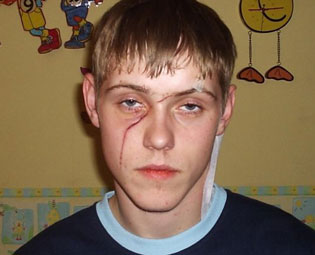
Peter Woodhams - Murdered by Bradley Tucker after a seven-month campaign of terror was waged against him by a gang of youths. Despite being previously slashed across the face and stabbed in the neck, the Independent Police Complaint Commission's findings were:

Officers failed to bring in forensic experts
No photographs were taken of the scene
A proper record of the attack was not made in officers' pocketbooks
Officers failed to contact the Woodhams family for more information
Anonymous phone calls identifying several suspects were not followed up by police
Two sergeants did not adequately manage the scene of the attack

As a result, a detective sergeant and a detective constable have been required to resign.

Jean Charles de Menezes - Brutally murdered by a member of the SO19 firearms unit, shot 7 times at point-blank range in the head after being "mistaken" for one of the men who had attempted a suicide bombing on the tube the day before. Despite two highly critical IPCC reports, one of which still yet to be publicly published, and a prosecution against the Metropolitan police on health and safety grounds, which is currently detailing the amazing incompetence and negligence of the Met on July the 22nd, no one has so much as been disciplined over de Menezes's death. In fact, quite the opposite has happened: Cressida Dick, the woman in charge on the day, has already been promoted to deputy assistant commissioner. Despite the second IPCC report into the police's response after de Menezes had been shot, which identified that Assistant Commissioner Andy Hayman had known that it was likely an innocent man had been shot as early as 16:00 the same day, he instead continued to brief the media that the assumption was that it was one of the bombers who was dead. As for Sir Ian Blair, despite seemingly everyone apart from him hearing the rumours that an innocent man had been killed, he didn't learn of the deadly mistake until the following morning. Neither have been disciplined, let alone felt the need to resign.

For Peter Woodhams, justice has come far too late. For Jean Charles de Menezes, it seems unlikely to ever come. It seems that those in the front line are expendable, while the responsible commissioners are untouchable.

Labels: , , ,

AddThis Social Bookmark Button

Friday, August 03, 2007 

de Menezes: The backlash commences.

The day after the IPCC report ought to have destroyed Andy Hayman's police career, it would have been expected that sections of the gutter press would have set out to attack the man (the IPCC) and not the ball as it were, but for the Guardian to join in is something that shows just how deep the apologism for the police's actions on that day has infected the media.

More on that further on in the piece, but first to the Scum, the police's eternal friend, so long as they're not investigating Tony Blair, which has some of the most disgraceful coverage of the aftermath of the report in quite some time:

One senior Met source blasted the inquiry, saying: “This has been a 21-month witch hunt that was determined to find a scapegoat.

“The shooting is something the Met profoundly regrets but what the IPCC never took into account was that on that day we were fighting a war. It feels like being left on the battlefield wounded. Scavengers, watching from the sidelines, have come along afterwards and stabbed the injured.”


Except the IPCC hasn't managed to even find a scapegoat, has it? Hayman, as the Scum article presents, despite being a liar personally responsible for the smearing of de Menezes, has been supported by Ian Blair, Jacqui Smith and Ken Livingstone, the latter of whom really should know better, but because of his personal admiration for Blair and his "reforms" has chosen to blot all the unpleasantness surrounding the shooting out of his memory.

To try and pretend that the IPCC never took the situation the police were facing that day into account is a joke. The report itself makes this clear in its very introduction. It's rather fitting that the "source" has chosen to put what was happening on the 22nd of July into the context of a war, as the Scum leader also does. Through this prism, you can either see de Menezes as a victim of friendly fire or as collateral damage, depending on your view. The point is that when fighting a war, you do everything you possibly can to avoid killing either those on your own side or innocents, something which the Met abjectly failed to do. When the police themselves think that they were fighting "a war" rather than trying to catch 4 attempted murders as quickly as was possible, it's little surprise that de Menezes' death was treated as something regrettable (collateral damage will always happen) rather than as a result of systemic failure. He was just another unfortunate who got in the way, rather than a living breathing person in the wrong place at the wrong time. To compare the IPCC to scavengers stabbing the injured is just as laughable. The two officers who shot de Menezes were back on duty before it was even decided if disciplinary action was necessary. Andy Hayman, responsible not just for the lies on that day, but also for the handling of the Forest Gate raid, was handed a CBE. Cressida Dick, who gave the order that resulted in de Menezes' death, was promoted.

Former Met Deputy Assistant Commissioner Alan Given, in charge of firearms operations during the July 2005 bombings, also defended AC Hayman.

He said: “The IPCC has come up with a few criticisms based on the language that was used in communications. It seems a long time and a lot of public money to have achieved that.”


Which proves that Given hasn't even bothered to read the report.

To the Scum's leader:

ANDY HAYMAN’S brilliant leadership in the fight against terrorism has saved dozens of lives.

He is admired by his men just as he is feared by the terrorist scum determined to destroy our way of life.


And also resulted in the end of at least one and in the destruction of others. Still, that's OK, because he's saved dozens of lives of innocents, not people like de Menezes or the Kamal family. I doubt any of the "terrorist scum" even know he is, let alone fear him. As defined by their very act, suicide bombers are generally without much fear or morals, as both tend to get in the way of ending your own life by the method of explosive backpack.

The Queen awarded him a CBE for his handling of the aftermath of the 7/7 bombings which tore the life from 52 innocent commuters in London two years ago.

Yet the Metropolitan Police Assistant Commissioner had his name dragged through mud yesterday after an inquiry by the academics and do-gooders of the Independent Police Complaints Committee.

His crime? He was late in telling his boss, Met Commissioner Sir Ian Blair, a man shot dead at Stockwell Tube station was not one of a group of madmen who tried to repeat the 7/7 carnage a fortnight later.

It's a commission, not a committee. Secondly, just a couple of weeks ago the Scum was in hysterics
after the BBC owned up to misleading the public over phone-in competitions. Hayman not only didn't inform Blair, he, to quote the IPCC report:

AC Hayman either misled the public when he briefed the CRA that the deceased was not one of the four or when he allowed the 18:44hrs 22 July press release to state that it was not known if the deceased was one of the four. He could not have believed both inconsistent statements were true.

When the BBC does it, there needs to be root and branch reform. When a top-ranking police office lies to the public, his name gets dragged through the mud for no good reason.

London Mayor Ken Livingstone was right yesterday when he ridiculed the idea that Assistant Commissioner Hayman was responsible for some “catastrophic error of judgment”.

He hit the nail on the head when he said it was all very well for the complaints panel to criticise while sitting safely in their office but “you try doing it when you’re waiting for the next bomb to go off.”


He wasn't responsible for a catastrophic error of judgment, he was personally responsible for misleading not just those around him, but for lying to the public when the probabilities suggested the man shot dead was innocent. Either you don't give a running commentary to the press, or you make damn sure that what you tell them is right to the best of your knowledge at that time. He comprehensively failed to do this, resulting in the continuing belief right down to this day that de Menezes ran from the officers when he did no such thing, as shown in the comments on the Scum's article.

And that is what those who make a living from the civil rights lobby would like us to forget.

That when the unfortunate Jean Charles de Menezes was shot by police, four would-be bombers were on the loose and London faced another disaster.

The cops who shot Mr de Menezes were in a “damned if they do, damned if they don’t” situation where a moment’s hesitation could have led to a repeat mass murder.


"Unfortunate", rather than tragic. The cops were not in any sort of damned if they do situation; de Menezes was being held down on the ground with his arms behind his back when he was shot, meaning he would have been completely unable to trigger any explosive even if he had been carrying one. That there was four bombers on the loose is no excuse for the numerous failures of that day which led to his death.

The IPCC spent £300,000 on this investigation into one small aspect of what happened on July 22, 2005.

All they managed to do was make a mountain out of a molehill.


One small aspect? This goes to the very heart of what happened and what went wrong: that the Met was responsible for lying statements and for attacks on Menezes' own character, which were only corrected when an outraged IPCC worker leaked them to ITV News. We wouldn't have known the truth for possibly over a year if she hadn't done so; her reward was having her door broken down at dawn.

It is time we let Andy Hayman get on with hunting our enemies.

Further raking over of this sad incident would lead to the charge of wasting police time.

And giving comfort to the enemy.


I agree with the second statement. If Hayman won't resign, he should be fired. The police's actions on that day were the only comfort to the "enemy"; if they fail to kill anyone, they can at least rely on the police to do their job for them.

The Guardian's leader, while at least acknowledging that mistakes were made, fails to even mention Andy Hayman, concentrating instead on Ian Blair. After attempting to excuse the police in the same manner as the Sun does because of the "context" of what was going on that day, it then instead turns its fire squarely on the IPCC:

However, yesterday also poses questions about the IPCC itself. Its report examines inconsistencies in the way the police processed information during a frantic 36 hours, at the end of which the Met got the essential facts right and owned up to them in public - and it has never subsequently wavered from them.

This is patently untrue, as examined above. The Met continued to maintain its own version of events until the evidence which exposed the reality were leaked.

Yesterday's report is long and detailed. It comes more than two years after the events it examines. It cost at least £300,000. The public is entitled to ask if this is proportionate to the problem, and whether it could have been done more quickly and less expensively. Independent police complaints procedures are important and necessary. But this has not been the finest hour of the police, nor of those who watch over them.

The IPCC then, having done all the hard work of getting to the very bottom of what happened, having been sued by officers for daring to even think of criticising them, gets just as much blame as the Met itself. It's little wonder that the police thought themselves so above this that those in charge on that day were promoted: even the Guardian won't dare to raise its voice loud enough against them.

Labels: , , , , , , ,

AddThis Social Bookmark Button

Thursday, August 02, 2007 

de Menezes: The most comprehensive account, but still no comfort.

As I mentioned when the 21st of July bombers were sentenced, the only casualty of their chappati flour and hydrogen peroxide mix was a man who had the misfortune of living close to where some of the suspects had taken up residence. While it took a length of time for the death of Jean Charles de Menezes to be almost forgotten, few reports on the bombers mentioned that the only victim of that day's events was killed the next day, and not by them, but by bungling police officers.

Reading the second IPCC report (PDF), investigating what senior officers knew and when they knew it in conjunction with the statements put out by the Metropolitan Police Authority which were subsequently discovered to be strewn with inaccuracies which effectively smeared de Menezes, you quickly understand why one police officer subsequently described the events of that day as "a complete and utter fuck-up". The main abiding image is not one of collusion, or deception, although that does certainly occur, but of confusion and general incompetence.

While we are still likely some way of from acquiring a copy of the first IPCC report into exactly what happened and what went wrong that led to the shooting of de Menezes in the first place, this second report provides us with the most comprehensive summary of what happened and when yet released. Within minutes, as you would expect, it was discovered that de Menezes was not carrying any sort of explosives, yet this in itself was never made clear in the subsequent press releases by the MPA. At 11:22 hrs, just over an hour and fifteen minutes after police officers had initially informed Scotland Yard that a man had been shot dead, D/Supt. Kavanagh, working under assistant commissioner Brown, who was responsible for the strategic response to the previous day's attempted attacks, informed D/Supt Levett, who had been appointed to investigate the shooting that a lone "Pakistani male" had been shot; that he had not been carrying a bomb; and that he was in possession of a mobile phone.

Rather than basing the identification of de Menezes on his skin colour, which ought to have told anyone with more than six braincells that he was almost certainly not of Pakistani descent, it seems that this initial identification was based on the fact that de Menezes had been carrying a Pakistani business card. This was despite the fact that de Menezes had also been carrying both a wallet containing identification which confirmed he was of Brazilian origin and a mobile phone which had a photograph of himself on it, as well as other numbers which ought to have punctured the Pakistani connection fairly quickly. In any case, none of the four bombers were Pakistani in origin; all were of African descent. The fact that de Menezes, brutally shot 7 times in the head and once (correction 3/08/07: once, not 3 times as originally stated) in the shoulder with dum-dum bullets, was left with such substantial injuries (one would imagine there was little left of his head) made it more difficult to make a quick identification, but this is little excuse for mistaking him for Pakistani.

It was not until 14:47, more than 5 hours after de Menezes had been killed that the wallet, put on a seat in the tube train (we're not informed whether it was browsed before this time) was finally removed. This delay is put down to the need for both the area to be declared free of explosives and also secured and forensically analysed. Regardless, by then the news channels had been running interviews with witnesses, who made understandable mistakes about what had happened, in some cases mistaking the officers running to intercept de Menezes as the bomber himself, which is where the jumping the barrier myth came from. The police, if they had wanted, could have quickly corrected these mistakes, but did not do so and indeed, included them in their press releases, describing de Menezes as having behaved suspiciously and not obeyed a warning to stop, one which he was never given. Even with the wallet finally removed from the scene, which made it obvious that the man who had been shot dead was most likely of Latin American origin, Kavanagh still bizarrely informed AC Brown that he appeared to be of Eastern European ethnicity.

By 16:00, AC Brown was chairing a meeting to consider the community impact of the shooting, with the knowledge that the man was likely a Brazilian, although this had not yet been confirmed.

It's only now that those accused of misconduct come into view. Assistant Commissioner Hayman was due to address the Crime Reporters Association with what had occurred that morning. According to multiple accounts of those present, he informed the CRA that the man shot dead was not one of the four being sought. Strangely, when interviewed by the IPCC, Hayman couldn't remember what he had briefed the CRA.

The real, most egregious deception occurred next. At 17:00 hours the Management Board held a sub-meeting, at which, according to notes made by Ms Murdoch, the commissioner's chief of staff, AC Hayman made the following comments about what should be presented to the media regarding the shooting:

AC HAYMAN: There is press running that the person shot is not one of the four bombers. We need to present this that he is believed to be. This is different to confirming that he is. On the balance of probabilities, it isn’t. To have this for offer would be low risk.

Keep in mind that this is the same man that had already briefed the CRA that the man shot dead was not one of the four bombers; he had started the rumour, which he was now going to try to shut down. Knowing full well that it was unlikely that de Menezes had been connected in any way, not just that he was most definitely not one of the bombers, he and those at the meeting agreed that he should continue to be presented as having been one of the four, even though "the balance of probabilities" suggested he wasn't. As for the offer being low risk, if there is now any justice, Hayman must resign for failing both to inform Ian Blair of what had occurred, and for continuing to inform the media that the man was one of the bombers when on the balance of probabilities he wasn't. Nor was either of the meetings which took place at this time informed of the recovery of de Menezes' wallet, his mobile or his quickly emerging identity.

Where then was Sir Ian Blair in all of this? The report comes to the conclusion that as he has always stated, he had no idea that an innocent man had been shot dead until the next day, the 23rd of July. Indeed, the IPCC found no direct evidence that he even knew about the emerging identify of de Menezes, the recovery of any of the items from his body, and the likelihood that he was not involved in any way with the attacks of the previous day. As Blood and Treasure notes, it seems that everyone other than Blair within the higher ranks of the MPA knew that the man was most likely not one of the suicide bombers by the end of the 22nd of July, and most certainly did by 9am the following day. The only contradictory evidence is that of Brian Paddick, who came forward after Blair gave an interview with the News of the Screws in which he claimed he didn't know. Quoting from the report:

16.14.3 On 22 August 2005, DAC Paddick went to the Commissioner’s office and told him that he had had been concerned since he had heard him (the Commissioner) state at the press conference that the deceased was directly linked to the anti-terrorist operation. He explained to the Commissioner that he had been in the Commissioner’s Staff Officer’s office when the Commissioner had walked past on his way to the press conference and that he had been told by the Commissioner’s Staff Officer and Chief of Staff that the MPS had shot a Brazilian tourist (DAC Paddick does not suggest that the Commissioner was party to or even heard this conversation). He states that the Commissioner disputed this and said he had checked with Ms Murdoch and it was about 19:00hrs when he knew the deceased was Brazilian. DAC Paddick states that the Commissioner told him that the fact that the deceased was Brazilian did not mean that he could not have been a terrorist. He states the Commissioner cited the case of an Argentinean who had been found with a hand grenade at Gatwick Airport.

Blair, in his interview with the IPCC, disputes this and claims that he only knew that the dead man was Brazilian when briefed by AC Brown on the 23rd of July between 10:15 and 10:30. In its findings, the IPCC states:

The evidence of DAC Paddick and the Commissioner in relation to their meeting on the 22 August 2005 cannot be reconciled. DAC Paddick maintains that the Commissioner told him that he knew by 19:00hrs on 22 July that the deceased was Brazilian and the Commissioner maintains that he did not. DAC Paddick is supported by the notes that he made of the meeting and the Commissioner is supported by Ms Murdoch who states that she does not recollect ever concluding with the Commissioner that he knew of Mr de Menezes’ nationality by 19:00hrs. The weight of evidence supports that the Commissioner did not know anything of the emerging identity by the time he left NSY.

When it comes down to it, it doesn't really make much difference whether he knew the man shot dead was Brazilian or not. The real point is that he was either out of the loop, not informed by his staff of their suspicions which were increasing by the hour, or not paying proper attention, as the evidence of the Management Board sub-meeting suggests, when none of those present disagreed with Hayman's gambit that the balance of probabilities suggested the man shot dead was not one of the suicide bombings and that it needed to be presented to the press that he in fact was. Despite apparently not lying, Blair needs to explain why he was held in either such apparent contempt or feared by those around him that they didn't bother to inform him of their concerns. The previous attempt at doing so, that Blair tended to take bad news badly, most certainly does not cut it.

Despite all of this, the de Menezes family still has no closure. Their son, shot dead in the most distressing circumstances imaginable by a body of the state that felt it was perfectly acceptable to subsequently smear the man they killed in cold blood when there was not even any need to have done so, has still not received justice. The original report on what went wrong remains inaccessible, its findings and conclusions ignored and ridiculed by the police on the grounds that the situation on the 22nd of July justified the decision to shoot to kill, regardless of the innumerable mistakes made. The Health and Safety prosecution is a joke doomed to fail, while those responsible have all so far got off without so much as a slap on the wrist. The exposing of Hayman's lies and deception is no comfort whatsoever.

Labels: , , , ,

AddThis Social Bookmark Button

Tuesday, February 20, 2007 

Just fancy that!

Isn't it fascinating that our police can say for certain that someone filmed on the 22nd of July wearing a burqa is definitely one of the previous day's alleged bombers, yet when it came to Jean Charles de Menezes, who didn't look anything like any of the suspects, and who could have been stopped and arrested if it had not been for systematic failures that ought to have resulted in resignations, he was instead shot dead? It's another triumph! Will someone be promoted for this excellent work?

Labels: , , ,

AddThis Social Bookmark Button

Monday, February 19, 2007 

de Menezes: Ian Blair cleared, but questions remain.

The Grauniad's been leaked a copy of the IPCC report into Sir Ian Blair's conduct over the shooting of Jean Charles de Menezes, and while it clears Blair of knowingly lying, the picture it paints of the chain in command of the Met isn't very flattering, to say the least.

While we still don't know the full chain of events that took place on July the 22nd 2005, mainly because the initial IPCC report, a version of which was leaked to the News of the Screws last year, is unlikely to be released in full until at least the absurd health 'n' safety prosecution of the Met is concluded, what we do know is reasonably damning. While the police were looking for 4 men of North African origin, all dark-skinned, they instead trailed and shot a Brazilian, light-skinned man. Not only was he never ordered to stop, despite what Sir Ian Blair said that day, but he was shot 7 times in the head (and once in the shoulder) with dum-dum bullets without so much as a warning, even though he was being held to the floor and would have been unable to set off any explosives if he had actually been one of the alleged suicide bombers.

As you might expect, after they had picked up the remaining pieces of de Menezes's head and bothered to check his body, they would have quickly realised they had killed someone entirely innocent. Indeed, the report appears to state that by the afternoon (de Menezes was shot dead around 10am) the Met were starting to work on the assumption that their incompetence had lead to the death of the wrong person. Despite this, no one appears to have informed Blair, who at 3:30pm took part in a press conference where he wrongly claimed that de Menezes had been ordered to stop, and that the death was directly linked to the operation to find the failed suicide bombers.

The IPCC report says that this failure to inform their boss of bad news was "incomprehensible". A better description would be scandalous and potentially slanderous. While officers inside the Met knew full well that de Menezes was innocent, the press were being briefed that he had leaped the barrier, had refused to stop, had been wearing a heavy or bulky jacket, and may well have even had a bomb belt. All of these were lies, or misunderstandings, with some members of the public mistaking the officers who had leapt the barriers themselves with de Menezes. We have never, for example, had an explanation to why Mark Whitby, the most widely quoted witness on the day, said that de Menezes had been wearing a padded jacket when he was in fact wearing a light denim jacket. He was understandably distraught, but whether his mistakes were down to this we simply don't know, as he has refused to comment since. Instead, for a whole day (and then for over a year) de Menezes and his family were at worst smeared and at best treated abysmally.

It seems unlikely, unless the report is a lot harsher in full than it's being made out to be that Blair will be forced out because of this. The News of the Screws last year suggested that Blair may well have not been informed because he took "bad news very badly", which is a risible excuse for him not being informed of what had happened, but it appears that his account that he told the truth as he knew it to be is fundamentally accurate.

The real contempt for de Menezes was more in the promotion of Cressida Dick, the officer in charge of the operation on that morning. She was on our screens last week talking about gun crime,